Last Updated November 14th, 2023 at 03:12 pm by Lisa
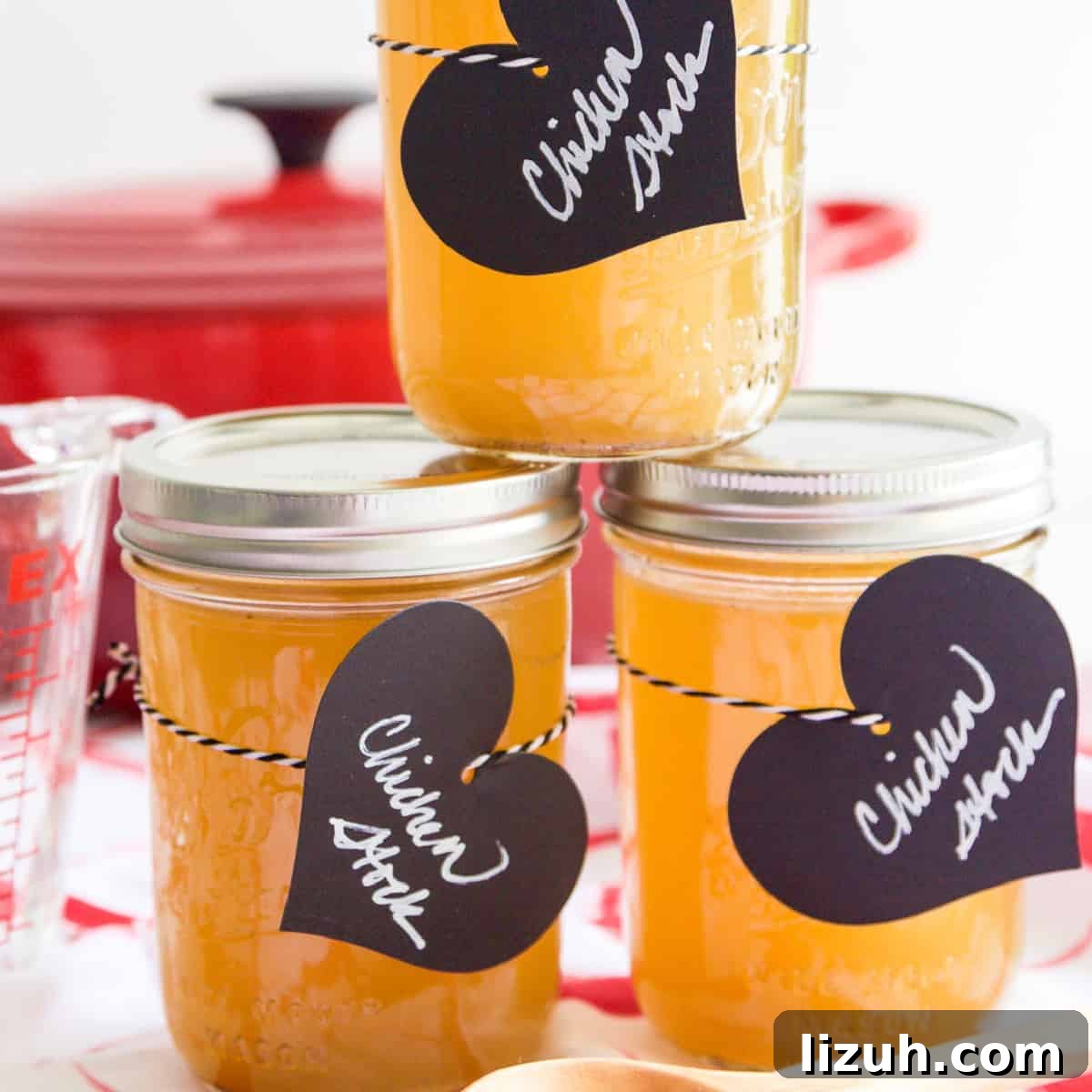
Learn how to make rich homemade chicken stock (bone broth) with this easy, reliable method. The recipe below gathers the best tips I’ve picked up over the years, including how to freeze and store stock and more than a dozen ways to use it. Making your own stock saves money, reduces waste, and instantly elevates dinners, soups, and stews.
Stock is economical — save leftover bones and vegetable scraps in the freezer until you have enough to make a batch. You don’t need whole chickens; bones and carcasses produce plenty of flavor. Most importantly, homemade stock adds depth and complexity you rarely get from boxed versions.
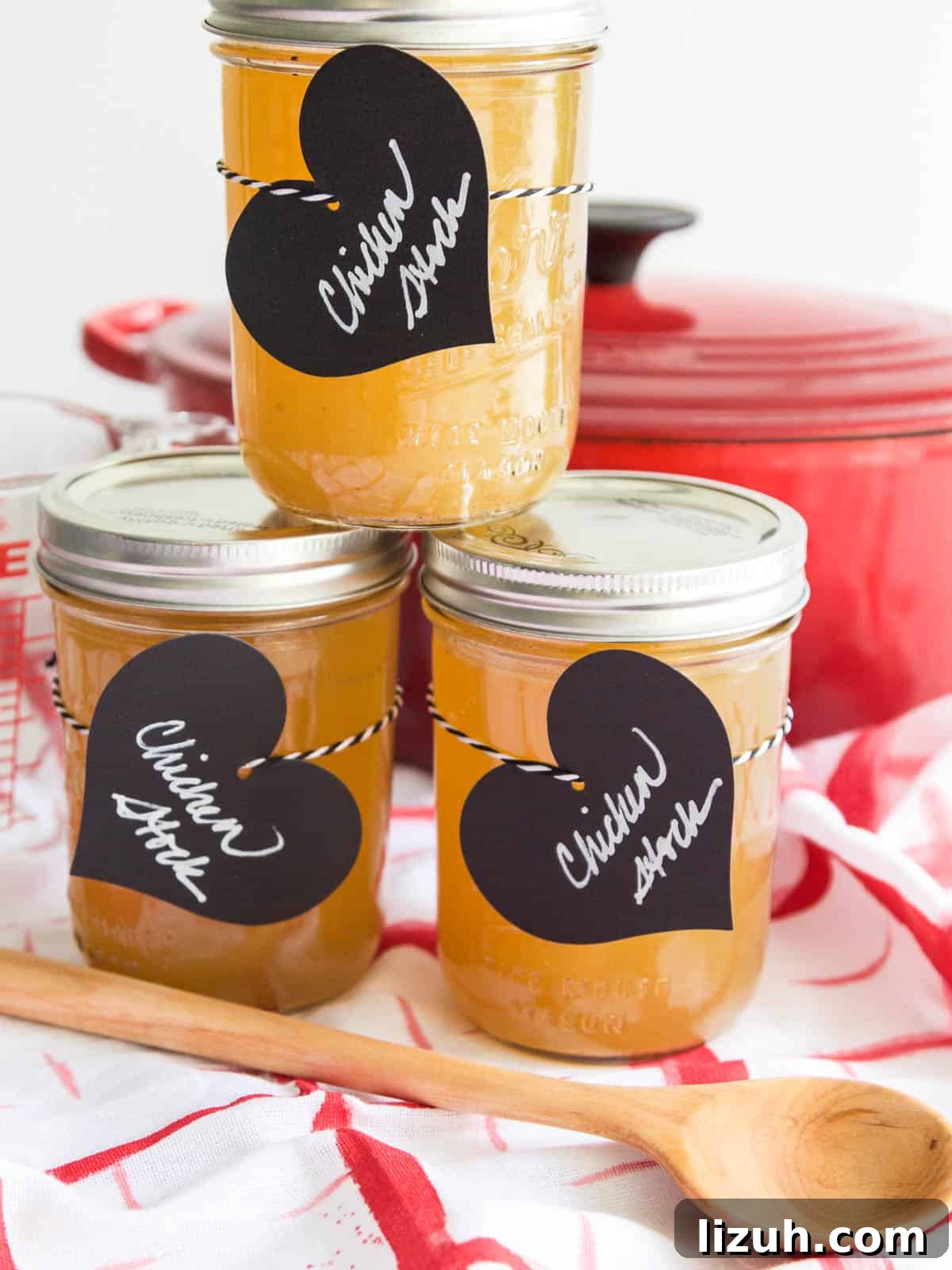
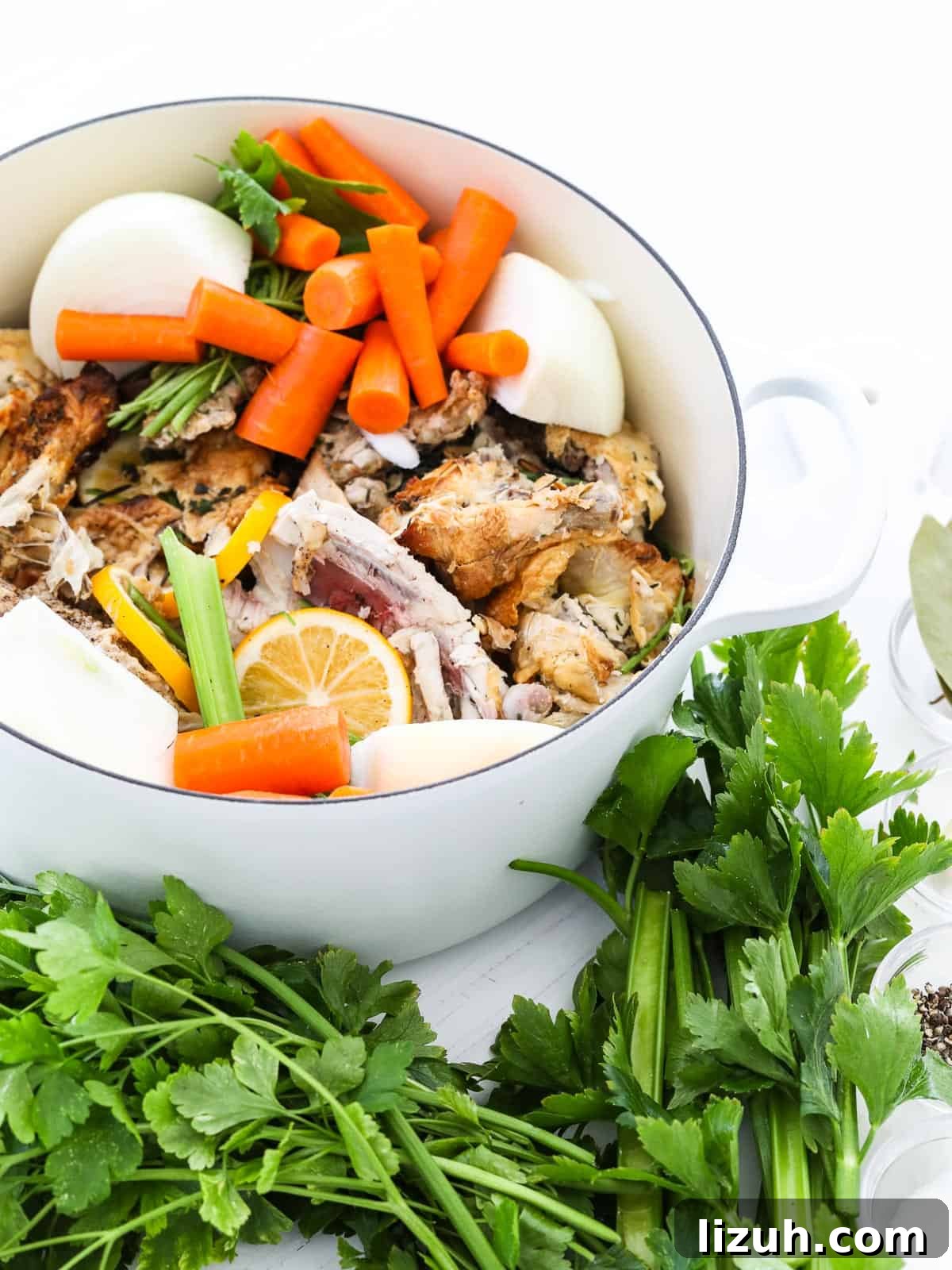
Table of Contents
- How to Make Chicken Stock
- Ingredients For Stock
- How To Make Chicken Stock
- Gather Your Ingredients
- Start Your Stock
- Simmering
- Cooling Down Stock
- Strain & Storage
- Why This Recipe Really Works!
- How To Freeze Chicken Stock
- What containers can I freeze the chicken stock in?
- How long does chicken stock last in the freezer?
- How do I reheat frozen homemade chicken stock?
- Chicken Stock vs. Broth vs. Boullion
- Chicken Stock
- Bone Broth
- Chicken Bouillon
- Top Stock And Bone Broth Tips
- Chicken Stock Bone Broth FAQ
- Chicken Stock (Bone Broth)Recipes
- More Chicken Stock Recipes
How to Make Chicken Stock
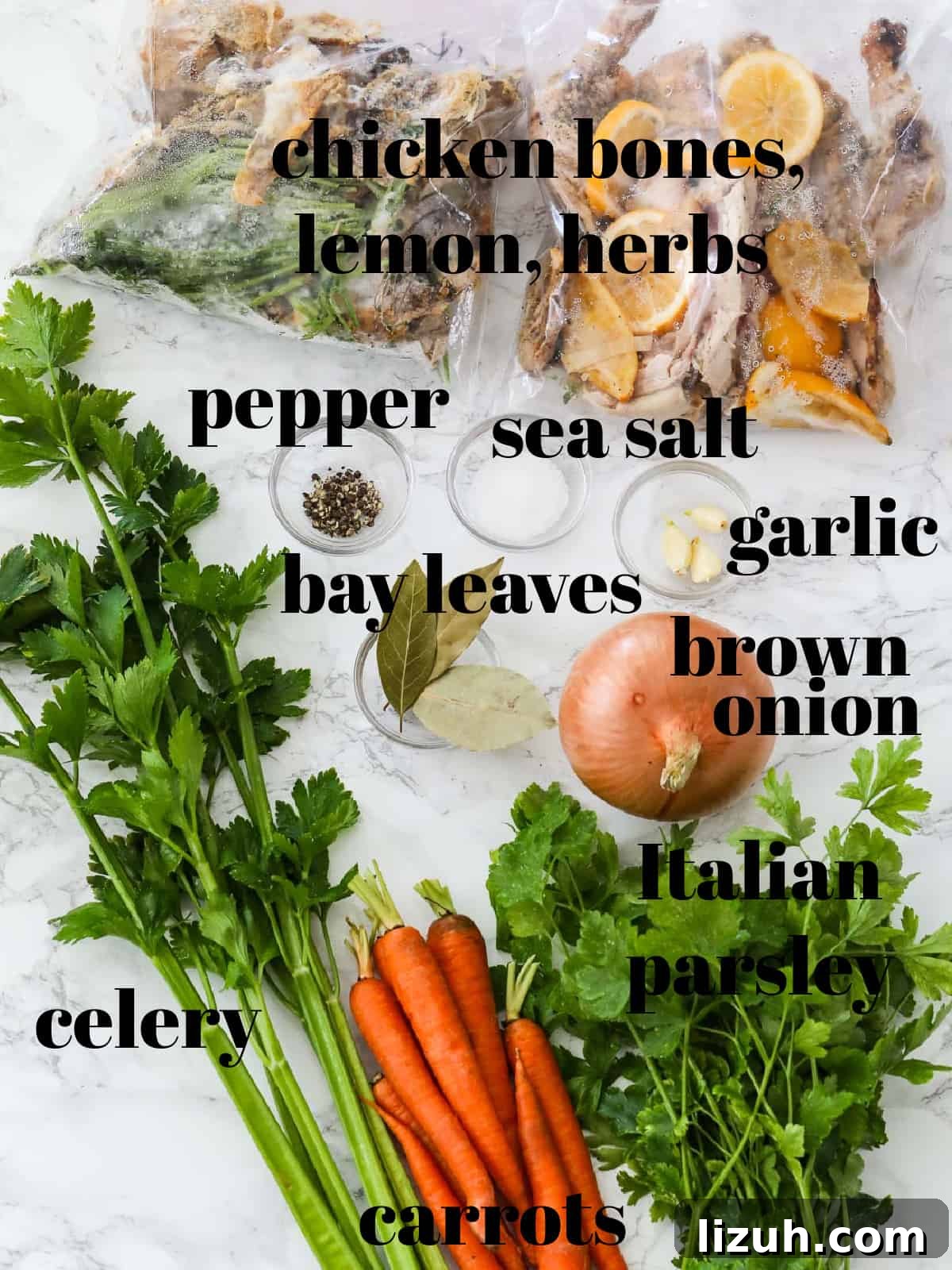
Stock requires just a few staple ingredients you can keep in the freezer and pantry: chicken bones or carcasses, vegetable scraps, herbs, seasonings, and water. I grew up with my mom making stock this way — it produces a richer, fresher flavor than boxed stock.
Ingredients For Stock
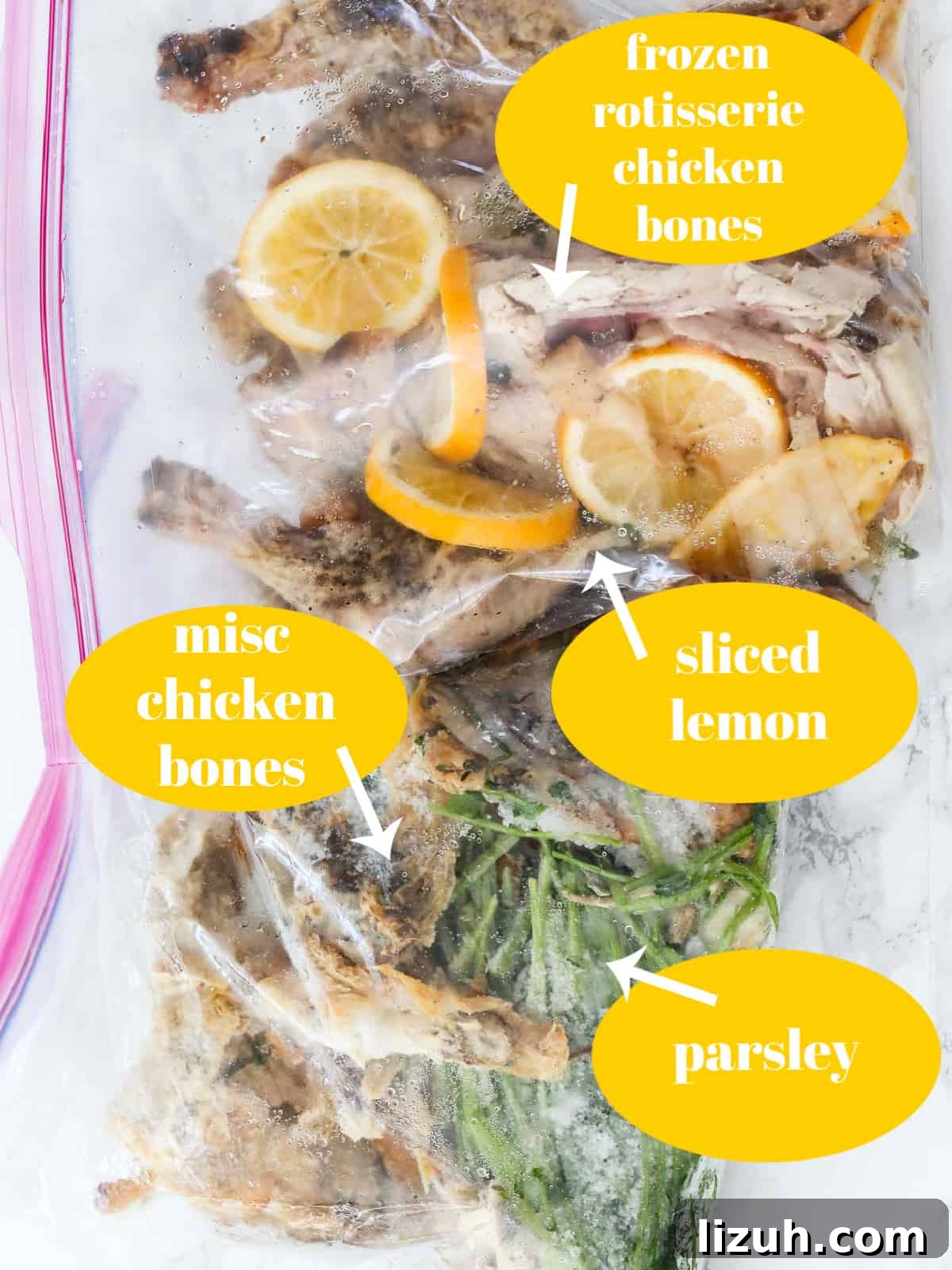
- 4 pounds frozen chicken bones (any parts: thighs, drumsticks, ribs, breast bones)
- 1 large peeled onion, cut into 4 pieces
- 6 carrots, peeled and halved
- 6 ribs celery, halved
- 12 sprigs fresh parsley with stems
- 3 bay leaves
- 1 teaspoon black peppercorns
- 1 small lemon, sliced (adds brightness)
- 3 teaspoons sea salt
- 1–2 whole cloves garlic, peeled (optional)
- Other herbs as desired: thyme, sage, or rosemary
- Cold water to cover the ingredients
PRO TIP: Salt matters. Use the recommended amount — too little salt can leave the stock tasting flat or “muddy.” You can always adjust later for the dish you make.
How To Make Chicken Stock
Gather Your Ingredients
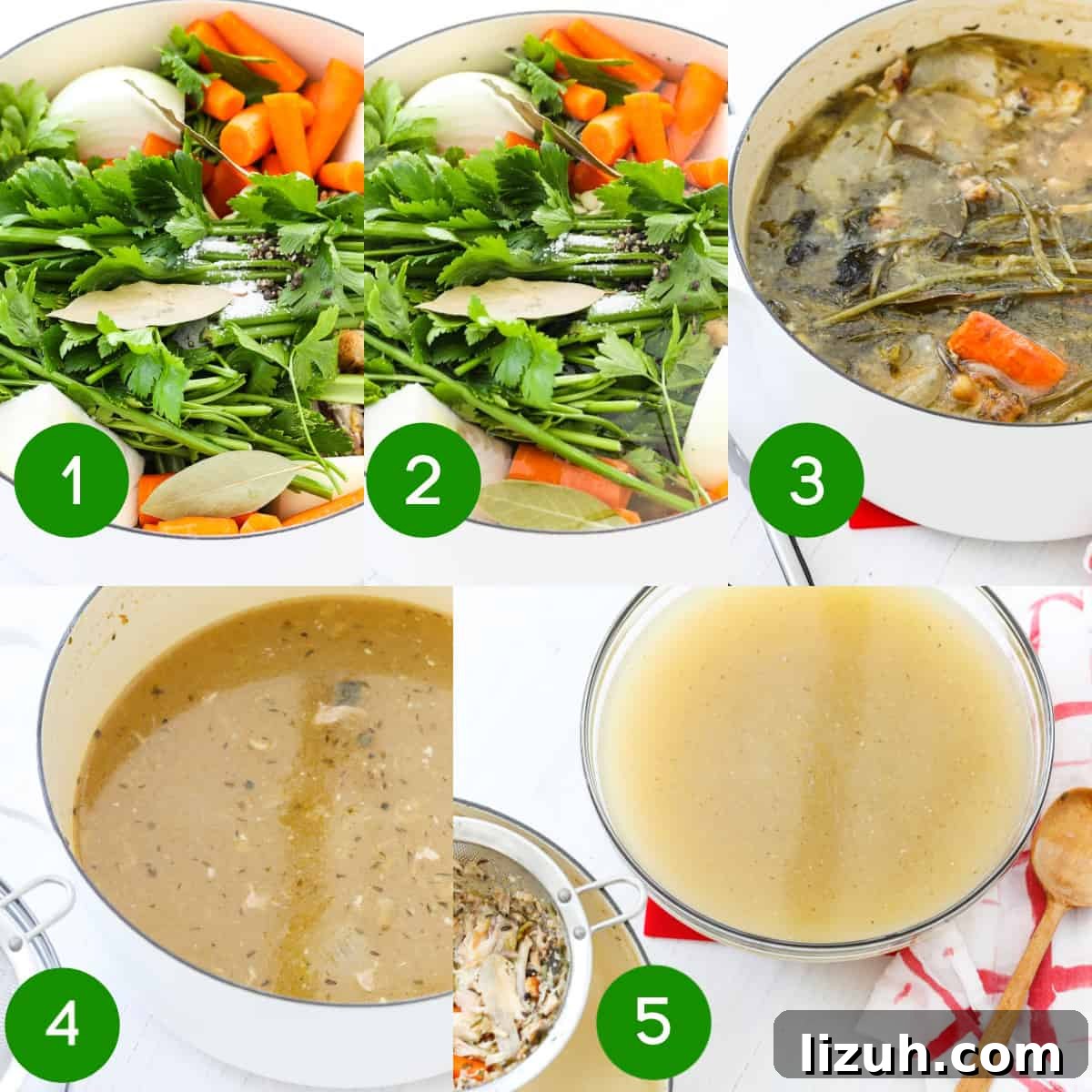
Step 1: In a large stockpot or Dutch oven, place frozen chicken bones (no need to thaw), vegetables, herbs, and spices. I usually collect bones and scraps in the freezer until I have enough for a big pot.
PRO TIP: Use this method to clear out fridge and freezer scraps — onion ends, carrot peels, and celery bits all add flavor.
Start Your Stock
Step 2: Add cold water to just cover the ingredients. Heat on high until you see bubbles, then reduce to a low simmer. Avoid a rolling boil. I like to add a handful of parsley on top. As it cooks, ingredients will sink and become fully submerged.
Simmering
Step 3: Simmer uncovered for 4–6 hours on low heat. A gentle simmer produces small foamy bubbles and occasional larger bubbles — this extracts flavor without clouding the stock. The house will smell wonderful while it cooks.
Cooling Down Stock
Step 4: When finished, turn off the heat and carefully remove the large solids with tongs or a slotted spoon and discard. Take your time — the solids will be hot and messy, but easy to remove.
Strain & Storage
Step 5: Strain the stock through a colander or sieve into a heatproof bowl or container. Discard any remaining bones or vegetables. Cool the stock quickly and store or freeze.
PRO TIP: Chill hot stock promptly. Pour smaller portions into bowls and cool with ice packs or an ice bath before refrigerating or freezing — don’t leave hot stock at room temperature for long.
Why This Recipe Really Works!
- Healthier than boxed stock because you control the ingredients and use fresh vegetables.
- Produces a flavorful bone broth-style stock rich with collagen when using joints or whole bones.
- Using just bones (rather than whole birds) is economical and reduces waste while still delivering excellent flavor.
- Homemade stock noticeably improves soups, stews, gravies, risotto, and rice.
- The aroma of homemade chicken stock filling your kitchen is unbeatable.
- When someone feels under the weather, a cup of warm homemade stock or a pot of chicken noodle soup is often the best comfort food.
How To Freeze Chicken Stock
Freezing stock is simple and convenient. Here are practical steps and options for storage.
- Cool quickly: Pour stock into smaller bowls to cool. Don’t leave hot stock at room temperature for more than an hour. Use ice packs or an ice bath under the bowls to speed cooling.
- Skim fat: After chilling, remove any solidified fat from the surface if you prefer a leaner stock.
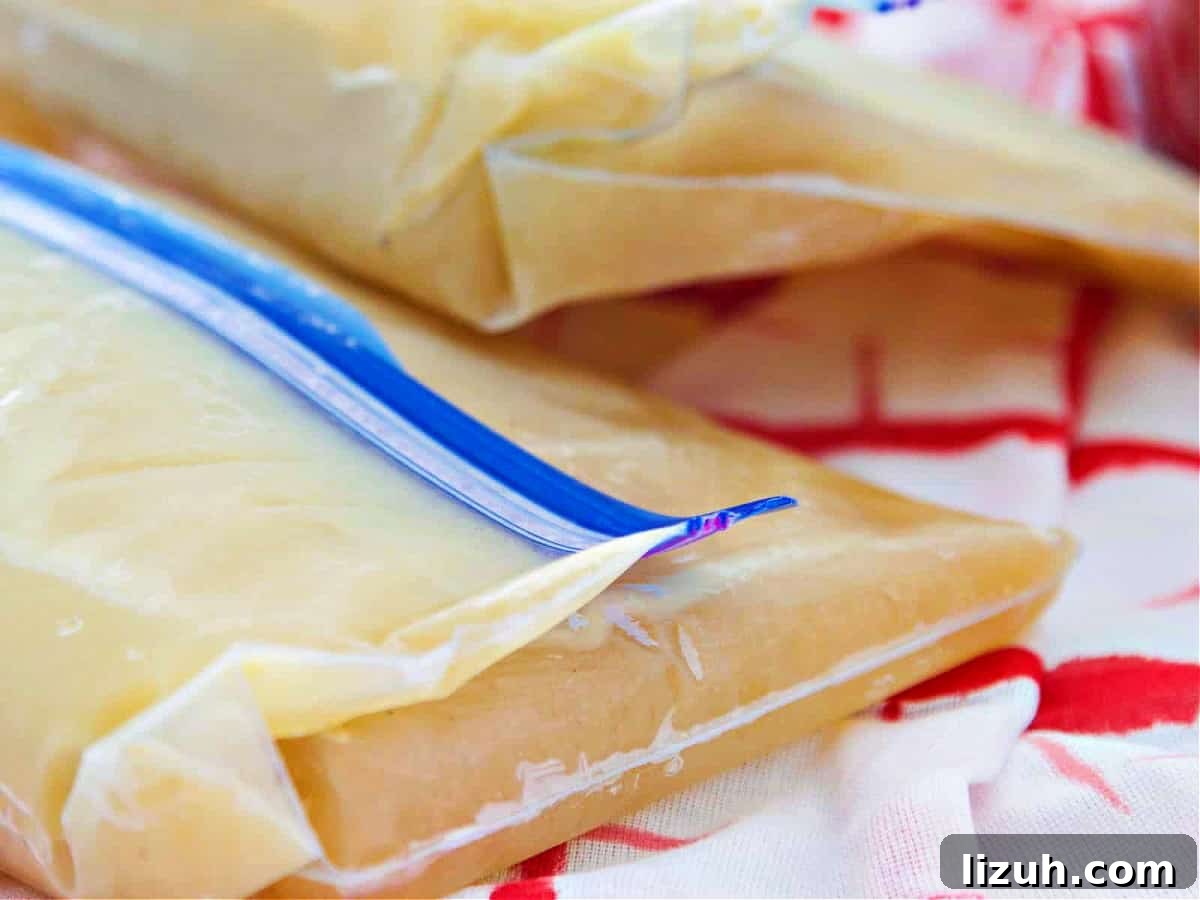
- Zip-top bags: Label bags with the date, place a bag in a bowl and fold the rim over, fill with stock, remove excess air, seal, then lay flat on a cookie sheet to freeze. Flat bags stack easily.
- Portioning: Freeze in 1-cup portions, quart containers, or larger freezer-safe tubs depending on how you plan to use the stock.
- Ice cube trays: Freeze small portions in ice-cube trays, then transfer cubes to labeled freezer bags for quick use in sauces and small recipes.
What containers can I freeze the chicken stock in?
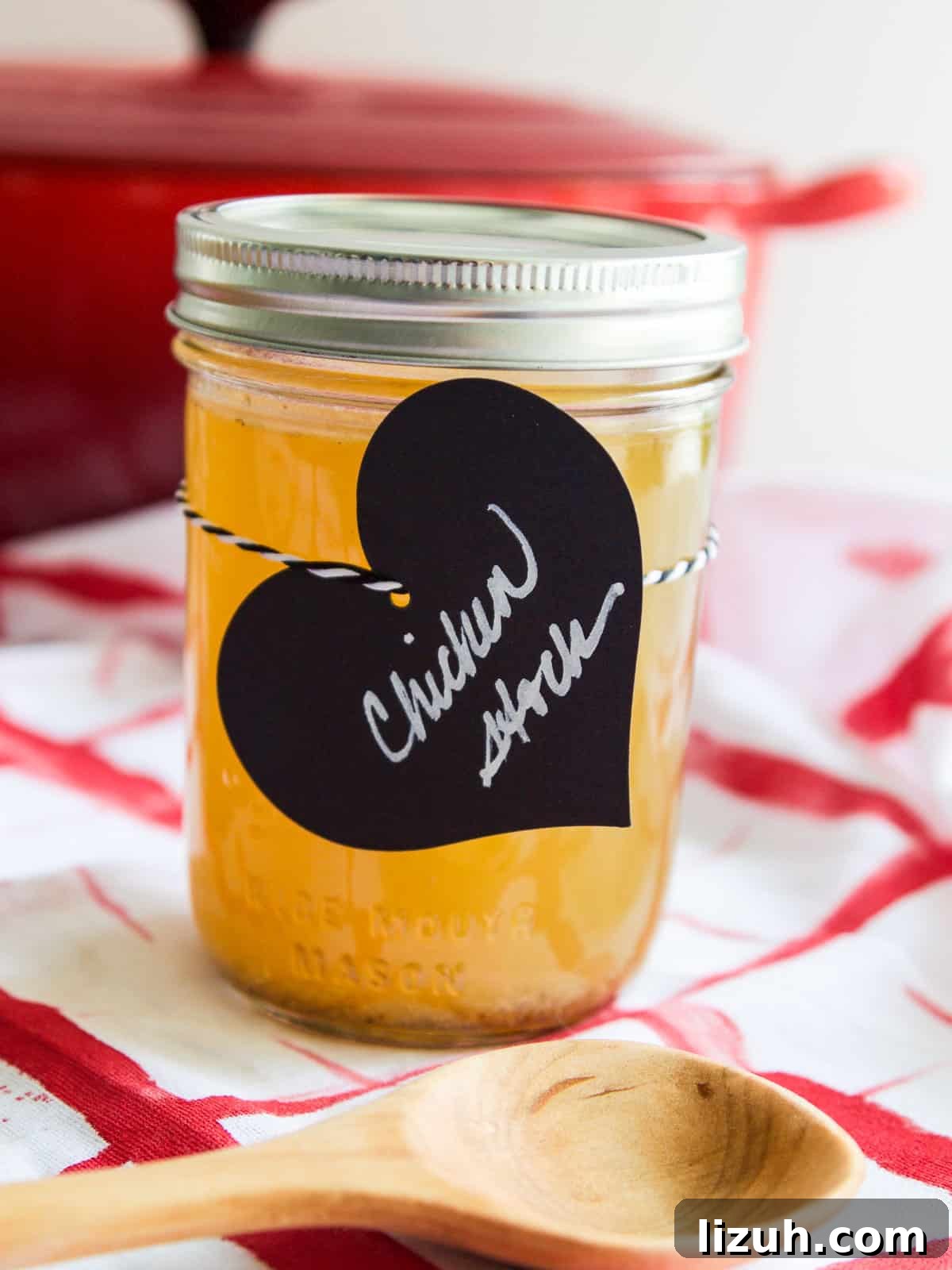
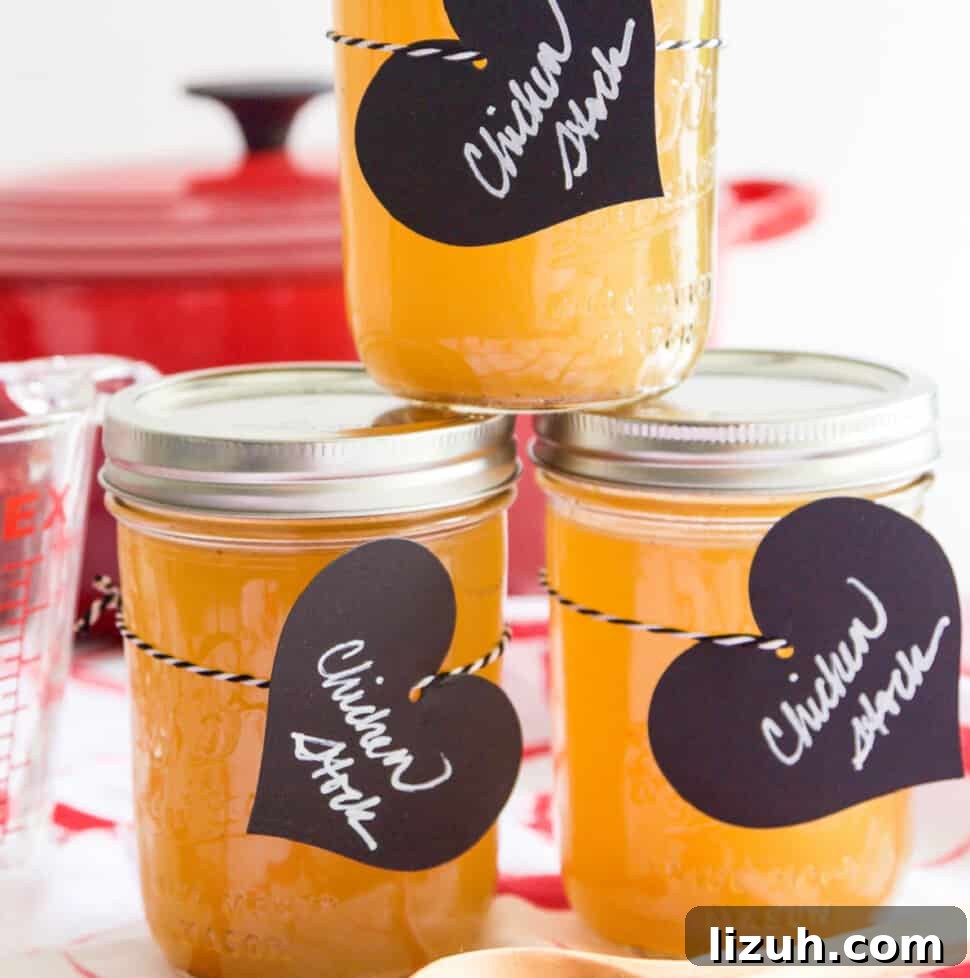
Use containers that are freezer-safe and airtight: mason jars (leave headspace), covered glass containers, BPA-free plastic containers, zip-top freezer bags, or heavy-duty freezer bags. Label with the date.
PRO TIP: If using glass jars, leave extra room for expansion to prevent cracking.
For small amounts, muffin tins or ice cube trays are handy. Freeze portions flat on cookie sheets for easy stacking and organization in the freezer.
PRO TIP: Freeze flat in labeled bags to save space. Ice-cube-sized portions are perfect for sauces, quick soups, and deglazing pans.
How long does chicken stock last in the freezer?
Homemade stock keeps well for up to 6 months in airtight, freezer-safe containers. For best flavor, use within 2–3 months and remove as much air as possible to prevent freezer burn.
How do I reheat frozen homemade chicken stock?
Thaw frozen stock in the refrigerator overnight when possible. Avoid leaving frozen stock at room temperature. For faster thawing, run the container under warm water until the block loosens, then transfer to a pot and heat gently. If using a sealed bag, you can place the frozen block directly into a pot with a little water and heat slowly until melted, then bring to a brief boil before using.
Chicken Stock vs. Broth vs. Boullion
In culinary terms, stocks and broths serve as fundamental building blocks in the kitchen. Though the terms are often used interchangeably, there are subtle differences.
PRO TIP: If you need a convenient store-bought option, concentrated bases such as chicken base (e.g., Better Than Bouillon) are useful and keep refrigerated.
Chicken Stock
Chicken stock is typically made from bones and vegetables and develops body from collagen released during long cooking. It can be made from whole chickens or just bones; using bones is economical and produces great flavor.
Bone Broth
Bone broth is a term that has gained popularity recently. It generally refers to a long-simmered liquid made from bones (sometimes with more meat) and is marketed for its nutritional and collagen benefits. In practice, home-made bone broth and traditional stock are very similar.
Chicken Bouillon
Chicken bouillon is a commercial concentrate available as cubes, granules, or pastes. It dissolves in water to make broth and is a handy flavoring for soups, sauces, gravies, and other dishes.
Top Stock And Bone Broth Tips
- Freeze scraps: Keep chicken bones and veggie scraps in labeled bags in the freezer until you have enough to make stock.
- Include rotisserie bones: Save bones from rotisserie chickens, wings, or other cooked poultry — they add great flavor.
- Portion before freezing: Divide stock into commonly used sizes (1 cup, 2 cups, or 1 quart) for convenience.
- Freeze flat: Lay filled zip-top bags flat on cookie sheets to freeze, then stack to save space.
- Taste and adjust: Taste a cooled batch before packaging and tweak salt if needed.
- Add lemon: Adding lemon halves or a splash of lemon juice gives the stock a bright, fresh note.
Chicken Stock Bone Broth FAQ
Stored in a sealed container in the coldest part of the fridge under 40°F, homemade chicken stock is safe for 3–4 days. Freeze any stock you won’t use within that time.
Yes. A layer of fat commonly solidifies on chilled stock. You can remove it with a spoon if you want a leaner liquid, or stir it back in for extra richness when reheating.
Yes — a gelatinous, wobbly texture when chilled is a sign of well-extracted collagen and indicates a flavorful stock.
Yes. If needed, use a concentrated bouillon or vegetable stock as substitutes. Be aware substitutions change the final flavor of a recipe.
Chicken Stock (Bone Broth) Recipes
Homemade stock makes many dishes better. Here are common uses where stock shines:
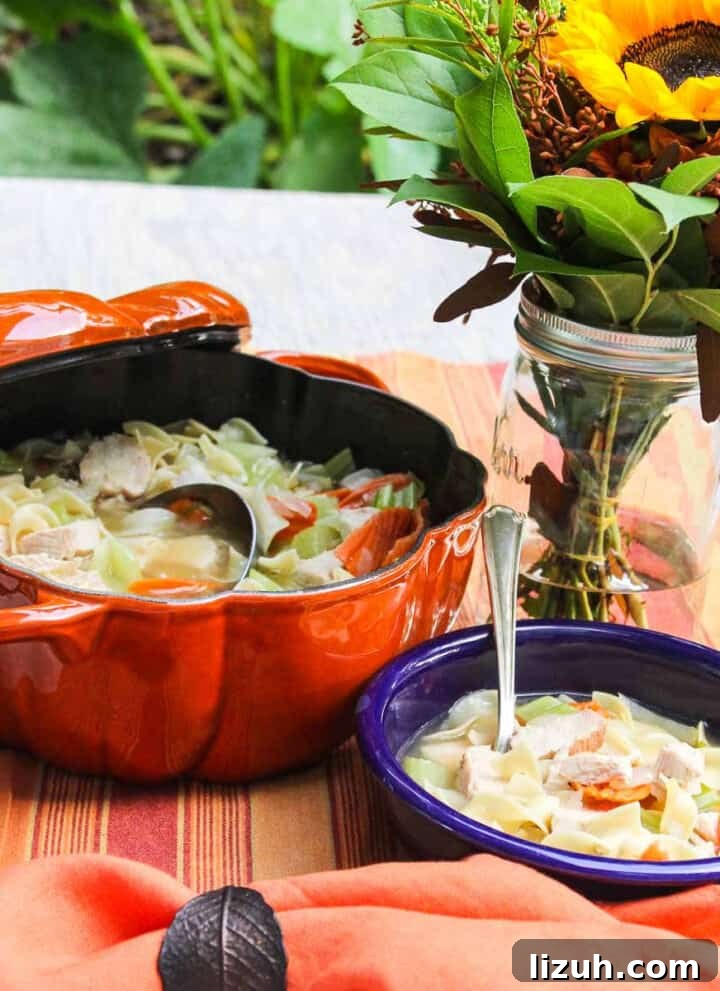
- Chicken Noodle Soup
- Chili
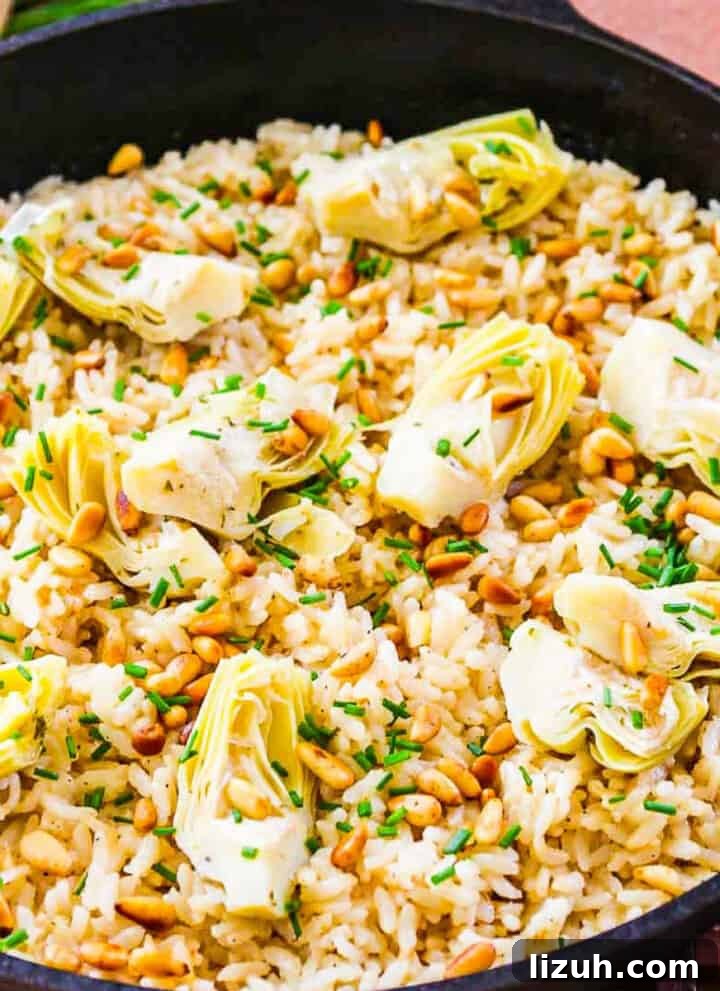
- Cooking rice for added flavor
- Risotto
- Alfredo sauce
- Marinara sauce
- Curry
- Gravy
- Stuffing
- Chicken pot pies
Classic dishes like chicken noodle soup taste especially comforting when made with homemade stock. It becomes the foundation for countless recipes.
-
Parmesan Risotto
-
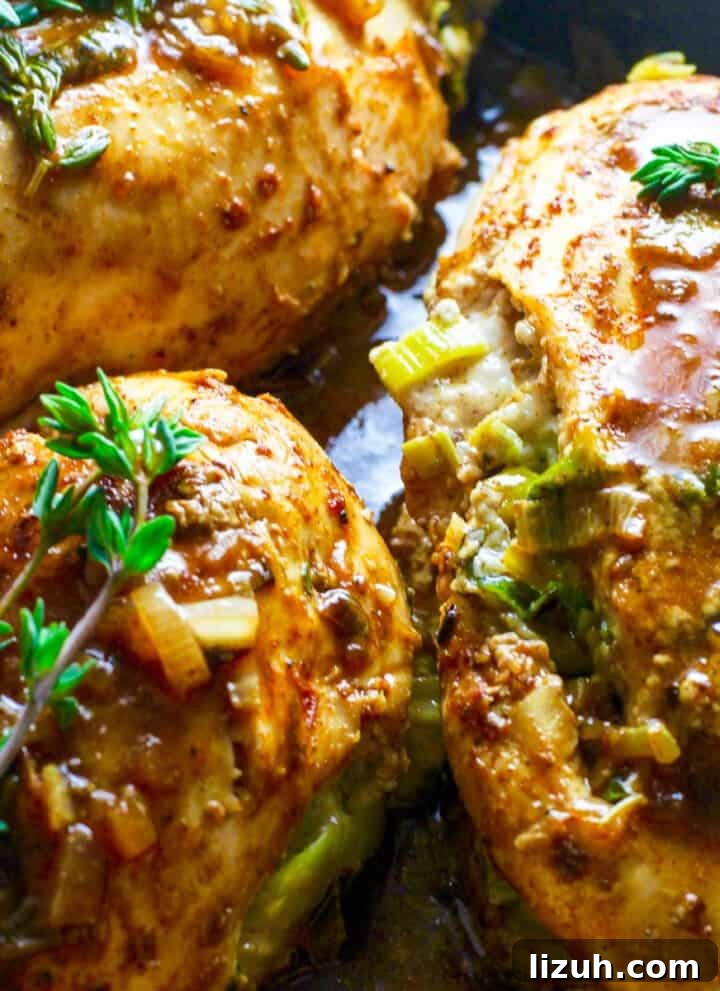
Stuffed Chicken Breasts
-
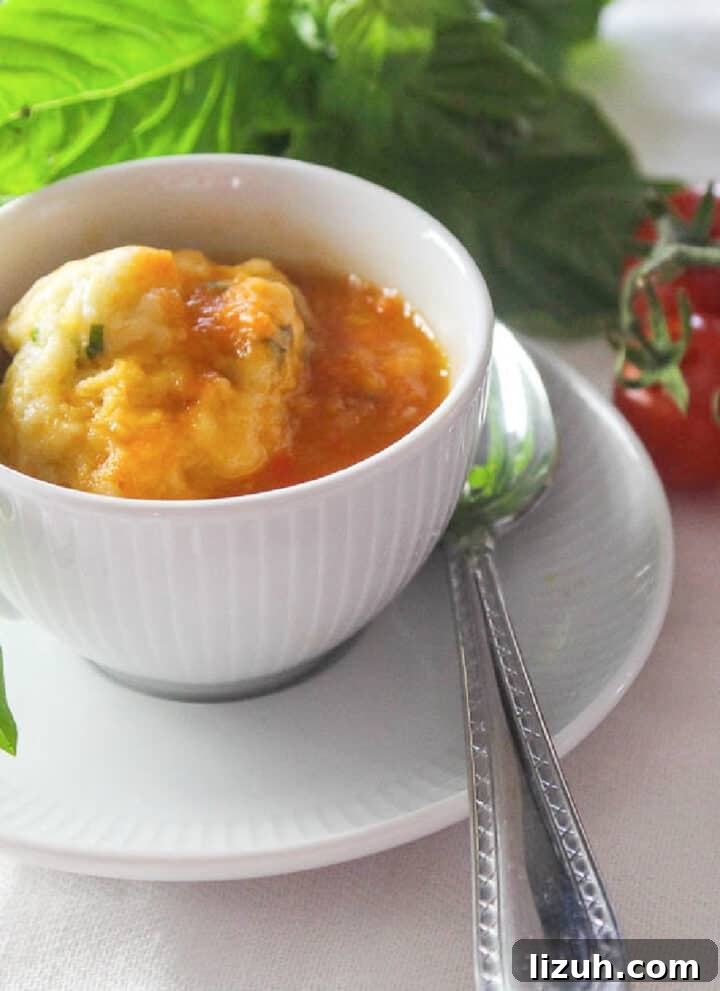
Tomato Soup With Basil Dumplings
-
Chicken Noodle Soup
More Chicken Stock Recipes
Use stock to make quick turkey gravy, stuffing, or to boost the flavor of roasted or spatchcock turkey. Homemade stock pairs well with holiday recipes and everyday meals alike.
-
Turkey Gravy
-
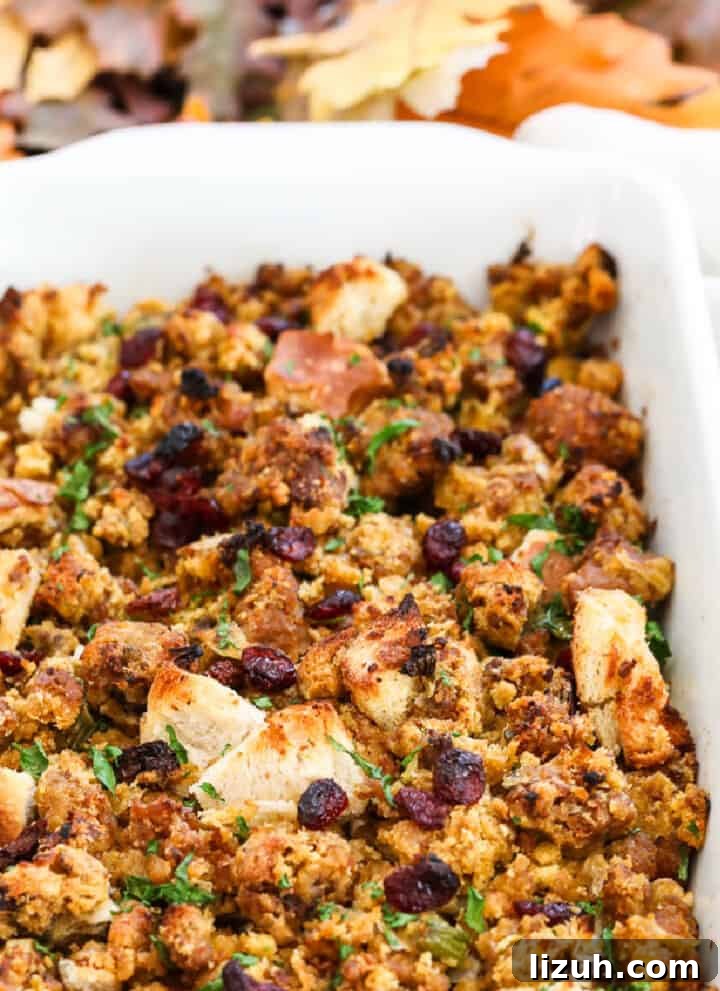
Sausage Stuffing
-
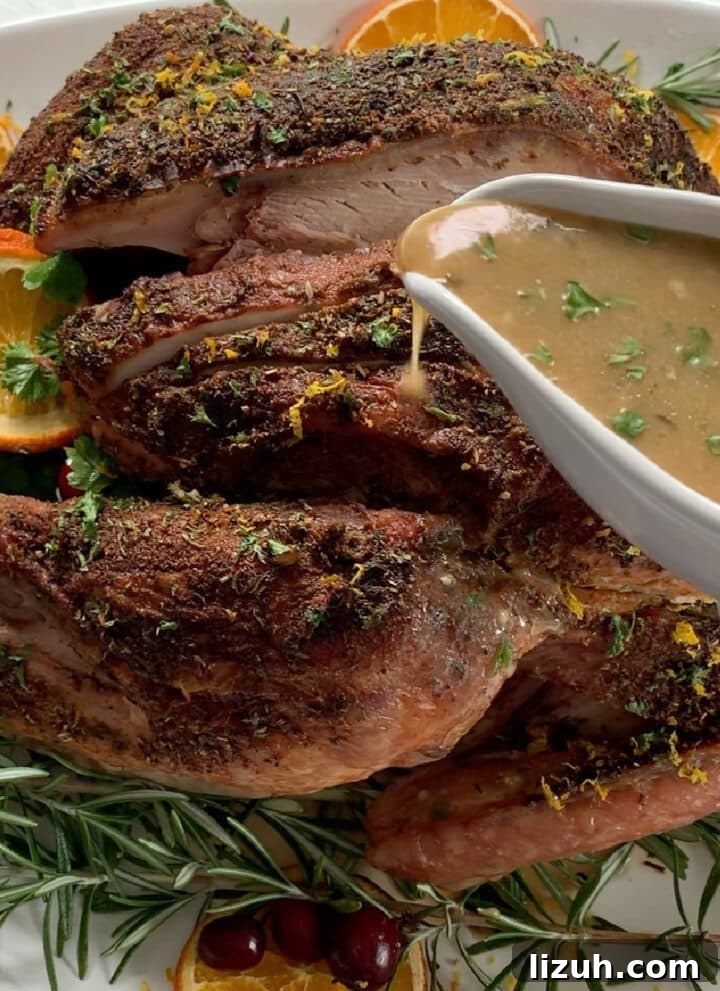
Roast Turkey (Dry Brine)
-
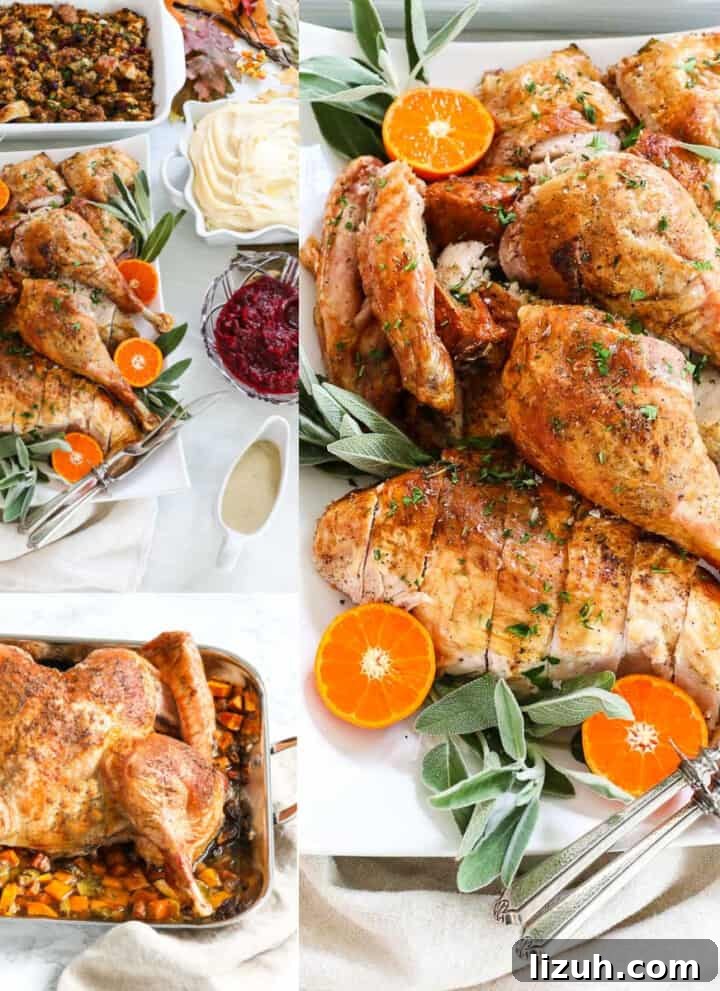
Spatchcock Turkey

Did you love this recipe? We would love to hear from you! If you make this recipe and enjoy it, please leave a rating and a comment. THANK YOU!!
Chicken Stock (Bone Broth) Plus Freezer Tips and 15+ Recipe Uses!
Ingredients
- 4 pounds frozen chicken bones (use rotisserie bones if desired)
- 1 large peeled onion, cut into 4 pieces
- 6 carrots, peeled and halved
- 6 ribs celery, halved
- 12 sprigs fresh parsley with stems
- 3 bay leaves
- 1 teaspoon peppercorns
- 1 small lemon
- 3 teaspoons sea salt
- 1–2 whole cloves garlic, peeled (optional)
- Cold water to cover ingredients
- Other fresh herbs (sage or thyme), optional
Instructions
- Place bones, vegetables, herbs, and spices in a large pot or Dutch oven. Add lemon halves if using and squeeze a little juice into the pot.
- Add cold water to just cover the contents and within an inch of the pot rim. Heat until bubbles and some foam appear.
- Reduce heat to a low simmer — a gentle simmer with occasional bubbles and steam is ideal. Push ingredients under the surface once in a while to fully extract flavor.
- Simmer on low for at least 4 hours. Cool for about an hour, then remove large solids and strain through a finer sieve to remove small pieces.
- Chill quickly, skim fat if desired, and store in labeled freezer-safe bags or containers. Get the stock chilled and into the fridge or freezer within an hour of cooking to ensure food safety.
Notes
Top Tips
- Freeze scraps: Save bones and vegetable trimmings in bags in the freezer until ready.
- Use rotisserie bones: They add great flavor and convenience.
- Portion: Divide stock into commonly used sizes and label containers before freezing.
- Freeze flat: Lay bags flat to freeze for easy stacking.
- Taste test: Sample cooled stock and adjust salt before packaging.
- Add lemon: Lemon adds a bright finish and enhances the stock’s color and flavor.
PRO TIP: Pour stock into bags and freeze flat on cookie sheets for compact storage. Freeze small portions in ice cube trays for quick additions to sauces and recipes.