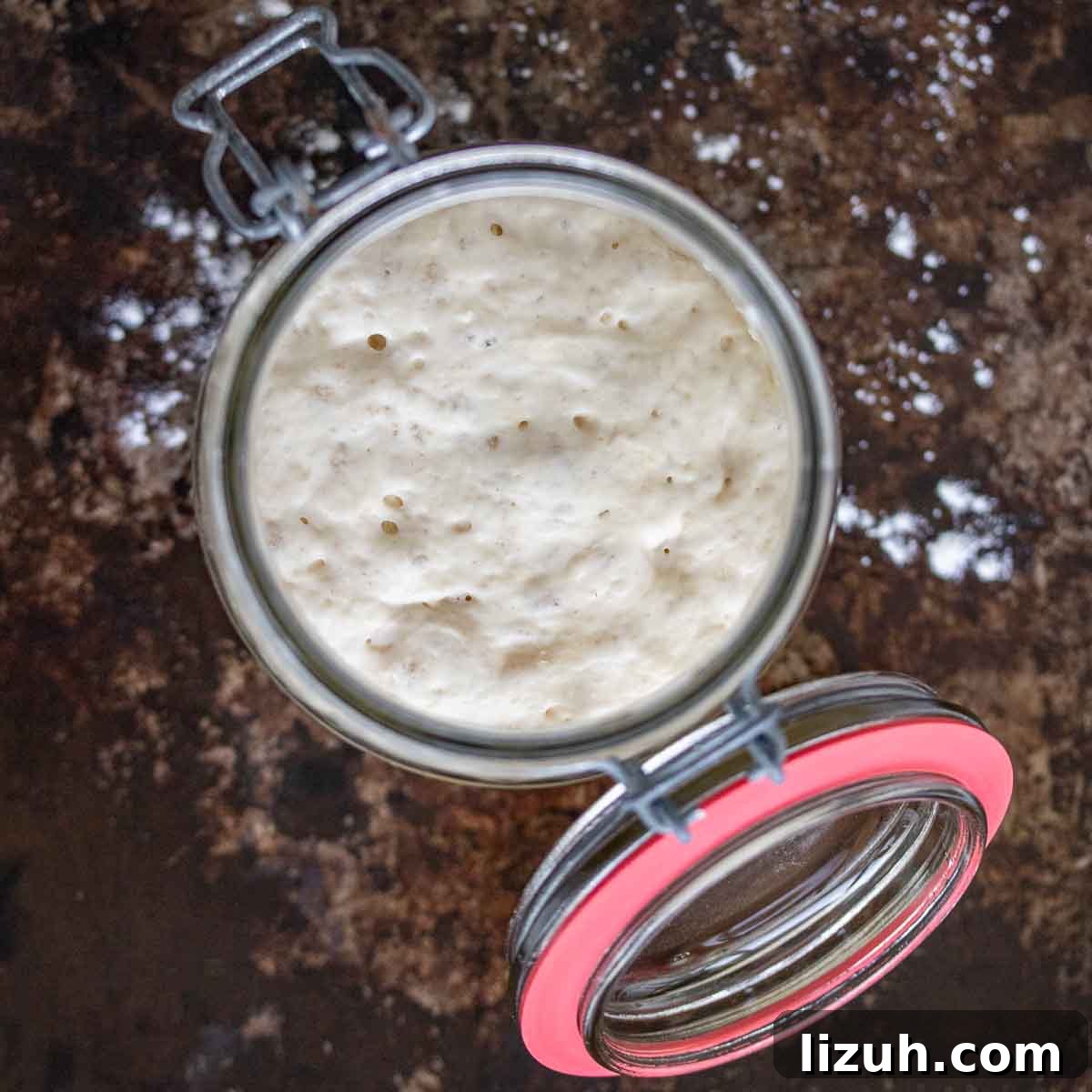
Poolish is a simple preferment that adds depth and bakery-like flavor to bread and pizza with minimal extra effort. Read on to learn its origin, benefits, and a straightforward method to make a poolish starter for bread and pizza.
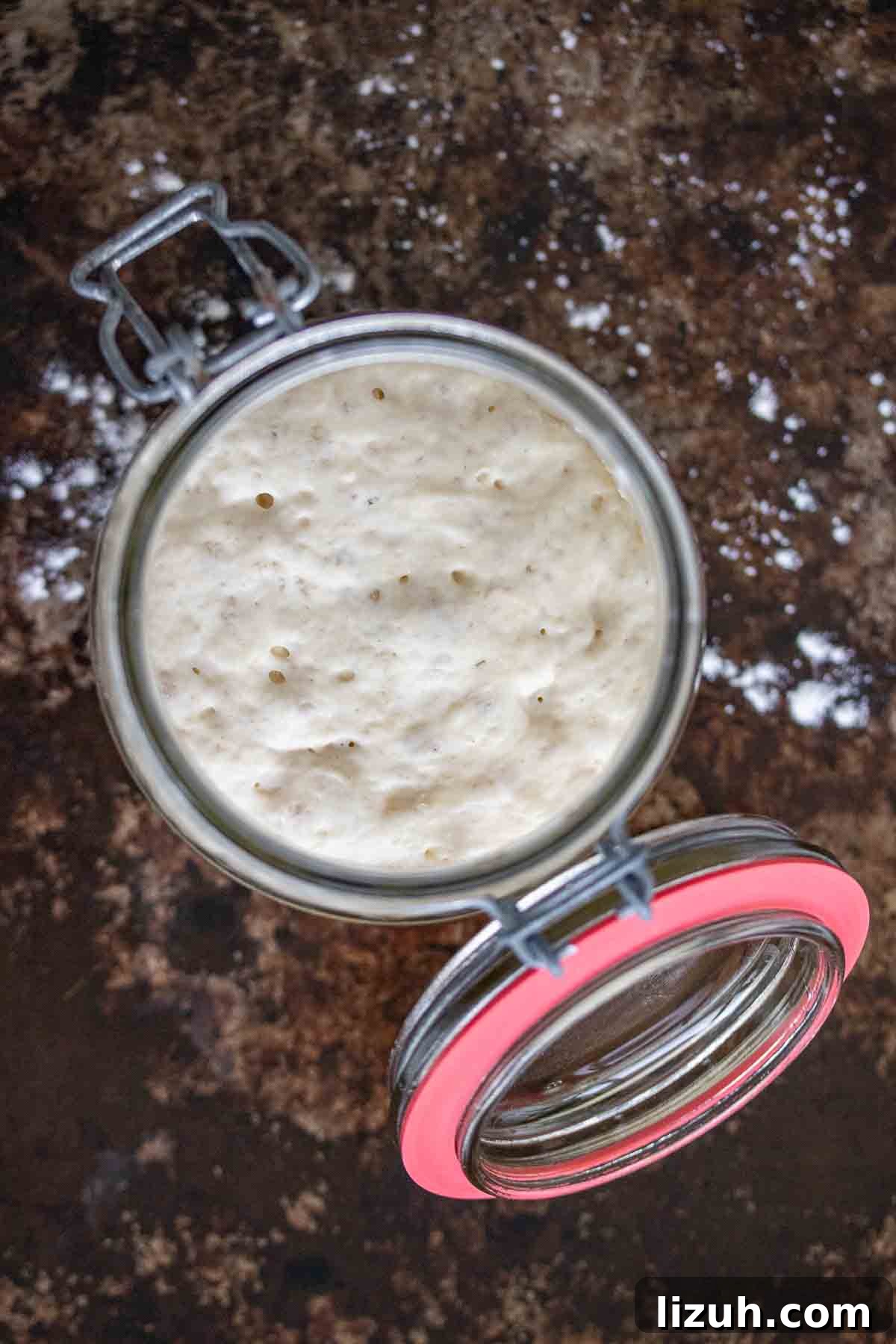
I have an approachable poolish baguette recipe for beginners.
What is Poolish?
Poolish is a wet preferment made from equal parts flour and water plus a small amount of commercial yeast. It originated with bakers in Poland and later became popular in Austria and France. Compared with sourdough, poolish develops a more complex, rounded flavor without pronounced sourness. Unlike maintained sourdough starters, poolish is prepared for a single batch and then used in the final dough.
Key characteristics:
- 100% hydration — equal weights of flour and water, producing a loose, batter-like mixture once fully fermented.
- Made with commercial yeast (instant, active dry, or fresh in adjusted amounts).
- No salt in the preferment — this distinguishes it from pâte fermentée (old dough), which contains salt.
Because of its high hydration the poolish mixes easily into doughs. I commonly use it for baguettes, rustic loaves, ciabatta, and pizza to enhance crust color, aroma, and crumb texture. At home it’s usually prepared the night before baking.
Why use a preferment?
Making a poolish adds a step and takes time — typically 3 to 16 hours depending on yeast and temperature — but the payoff is worth it. Baking with poolish will:
- Strengthen dough structure. Improved oven spring, crumb, and crust color.
- Boost flavor and aroma. A more complex, bakery-style taste without strong sourness.
- Extend freshness. Bread made with poolish tends to stay good longer.
Ingredients
Flour. Bread flour is common, but all-purpose, whole wheat, rye, or spelt can be used depending on the recipe.
Water. Use room-temperature water (filtered if desired). Avoid very cold water, which slows yeast activity, and very hot water, which can kill the yeast. In cold conditions, lukewarm water helps fermentation.
Commercial yeast. Instant or active dry yeast are both suitable. Fresh yeast can be used but requires different quantities. Do not substitute a sourdough starter when a recipe calls for poolish.
How much yeast should I use?
Yeast amounts depend on fermentation time and temperature. The following guidelines assume a room temperature around 80–85°F (27–29°C). If your kitchen is warmer, reduce yeast; if cooler, increase slightly.
Instant dry yeast, by approximate baker’s percentage:
- 3 hours: about 1.5%
- 6–8 hours: about 0.7%
- 12–15 hours (overnight): about 0.1%
Practical examples for a poolish made with 200 g water and 200 g flour:
- 3 hours: ~3 g instant yeast
- 6–8 hours: ~1.4 g instant yeast
- 12–15 hours: ~0.2 g instant yeast
Adjustments: multiply the instant-yeast amount by 1.2 for active dry yeast, or by 3 for fresh yeast. Always check the yeast’s expiration date and store it refrigerated after opening.
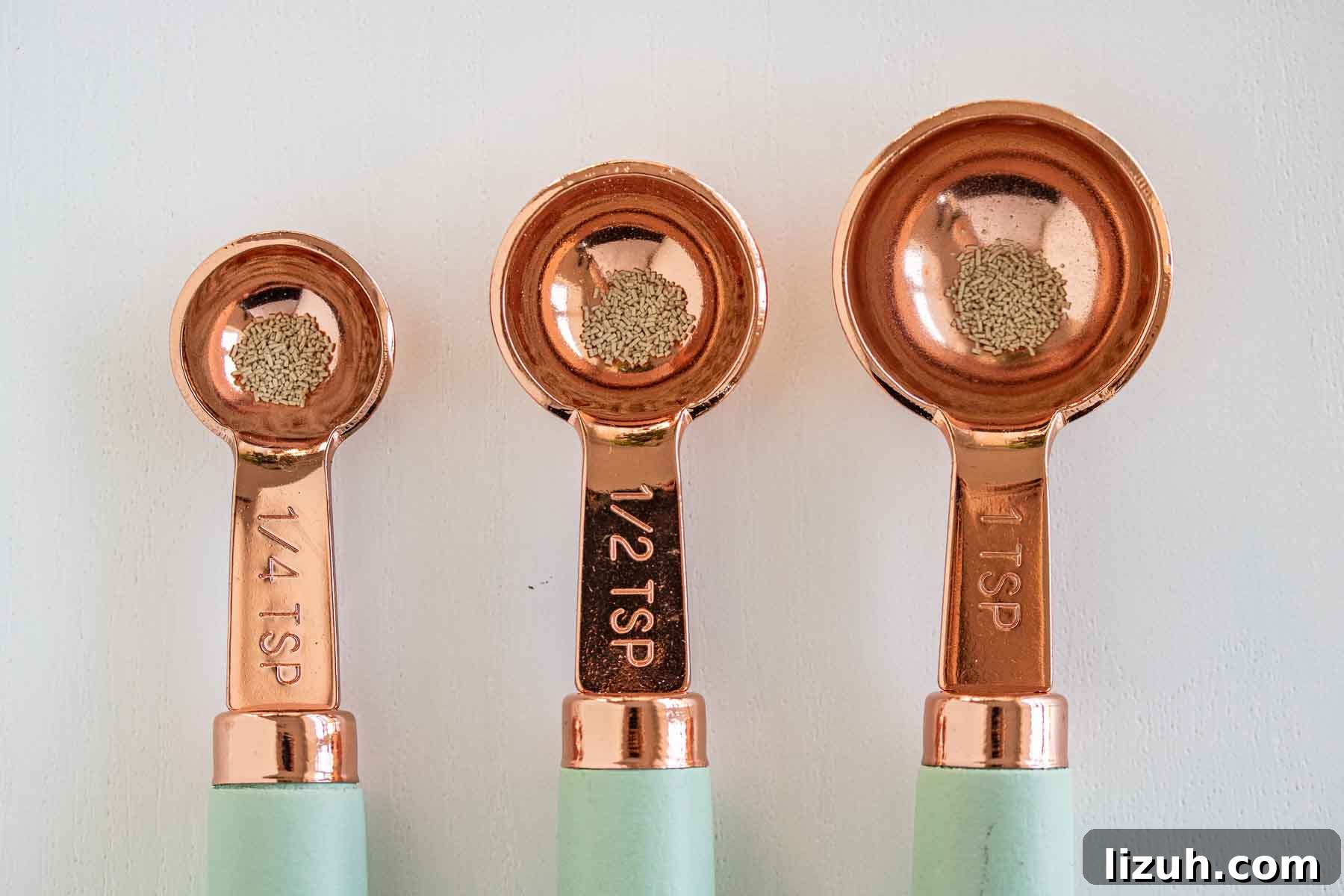
How to measure small amounts of yeast
If you don’t have a precision scale, there are practical options:
Mini measuring spoons: Small spoon sets can approximate yeast weights:
- 1/4 teaspoon ≈ 0.8 g yeast
- 1/8 teaspoon ≈ 0.4 g yeast
- 1/16 teaspoon ≈ 0.2 g yeast
- 1/32 teaspoon ≈ 0.1 g yeast
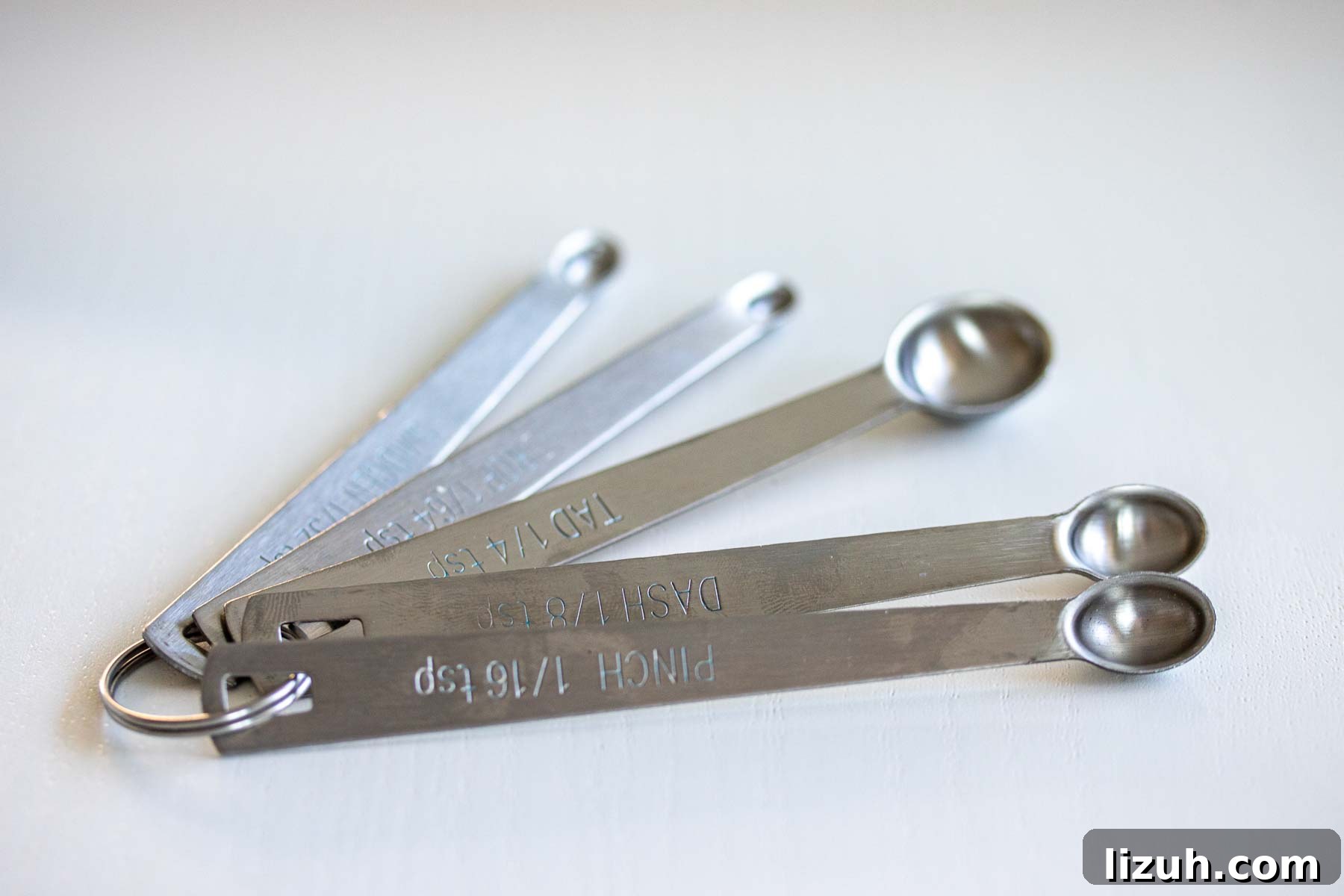
Mixing flour and yeast: For more consistent tiny measurements, blend 1 g instant yeast with 9 g flour (one part yeast in ten). Each 1 g of this blend contains ~0.1 g yeast. Store excess in the fridge for up to a week.
How to make poolish
Poolish uses a 1:1 ratio of water to flour. Yeast amount varies with the desired fermentation time.
Step 1. In a clean bowl, whisk together the measured water, flour, and the calculated small amount of yeast until smooth and lump-free.
Step 2. Cover the bowl with a clean towel, plastic wrap, or use a jar with a lid to prevent drying. Let the mixture ferment at room temperature for the planned time.
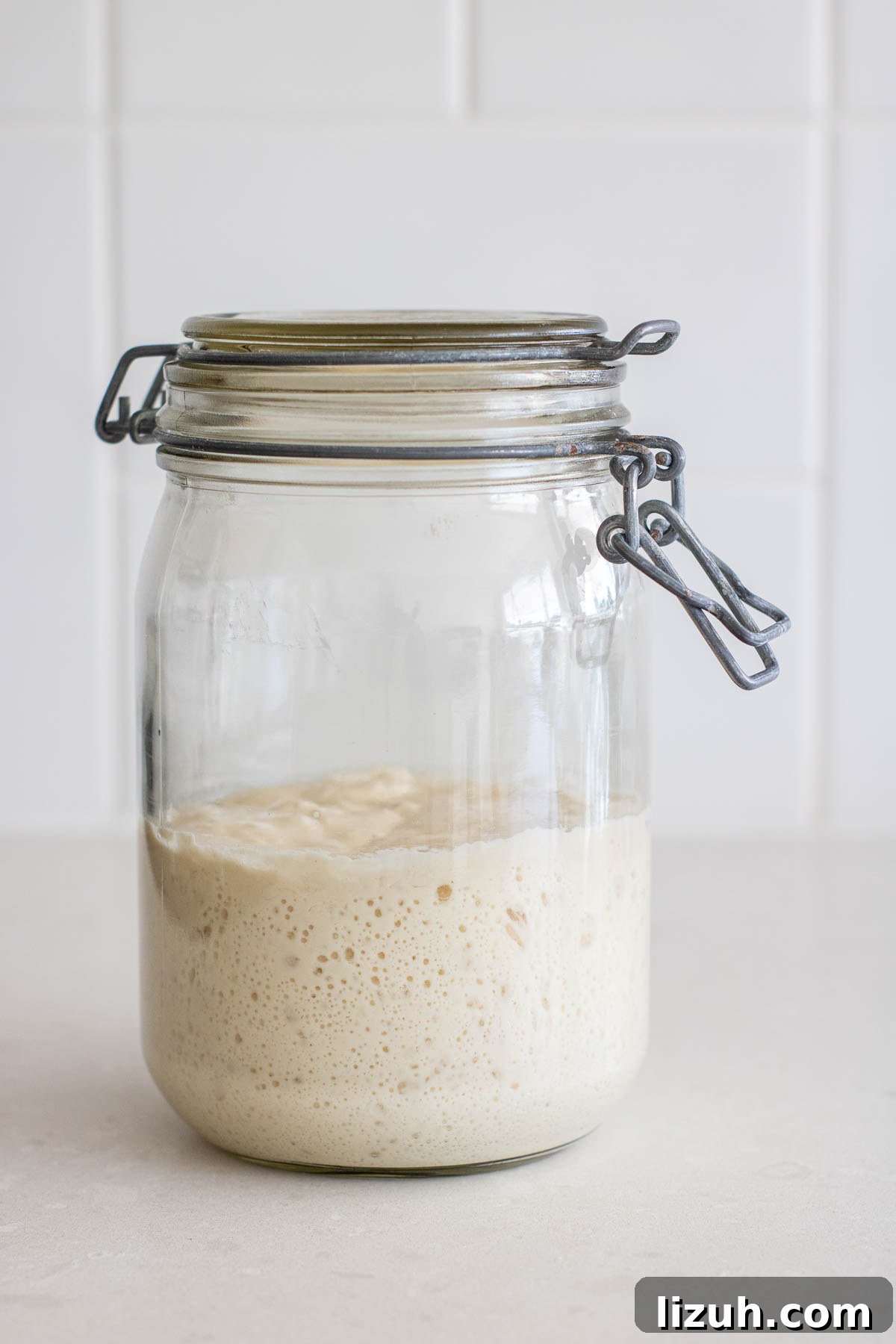
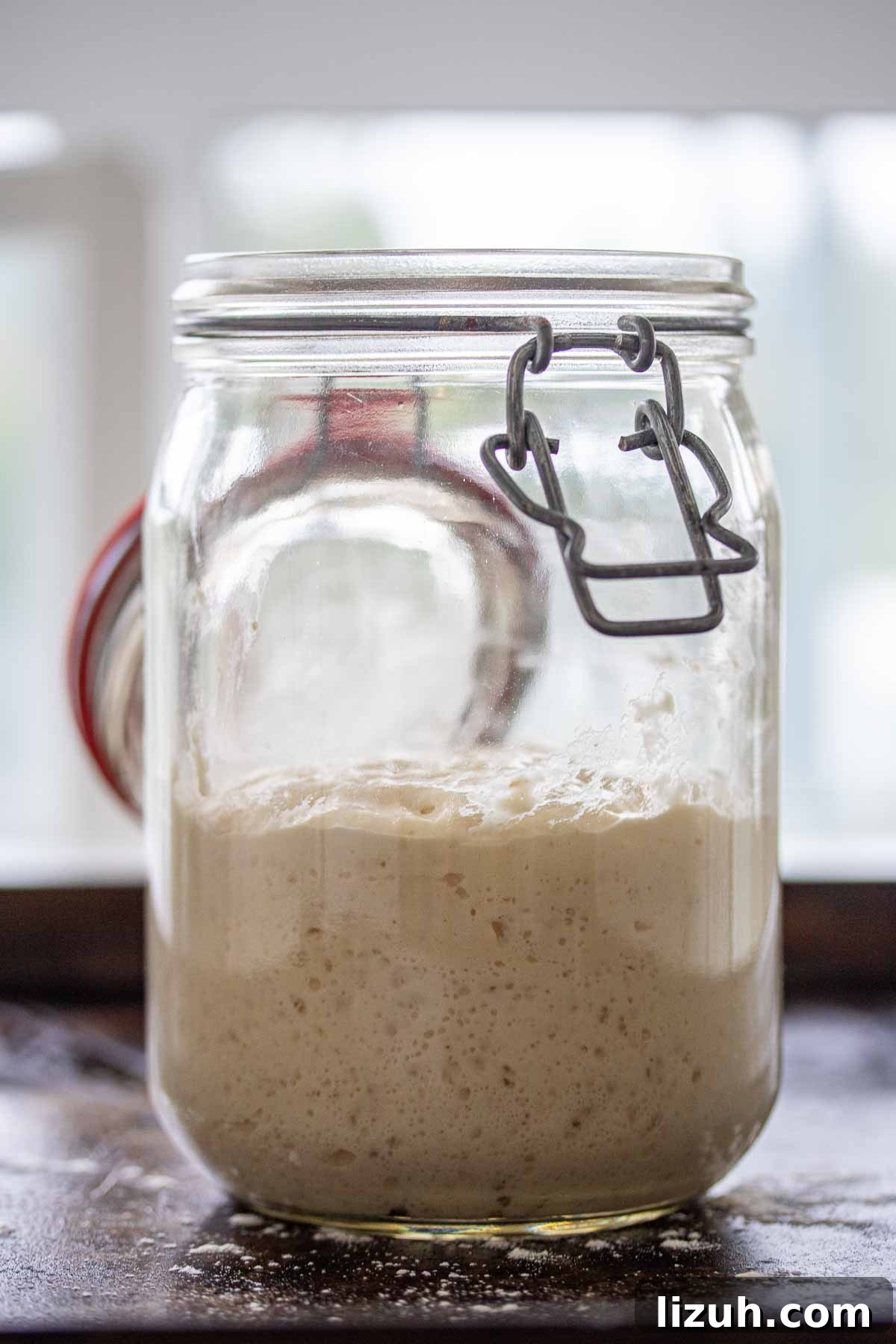
During fermentation the poolish will rise, often doubling or more. It is ready when it has a slight domed bump and begins to collapse or show a small dip in the center — this indicates it is ripe and ready to use.
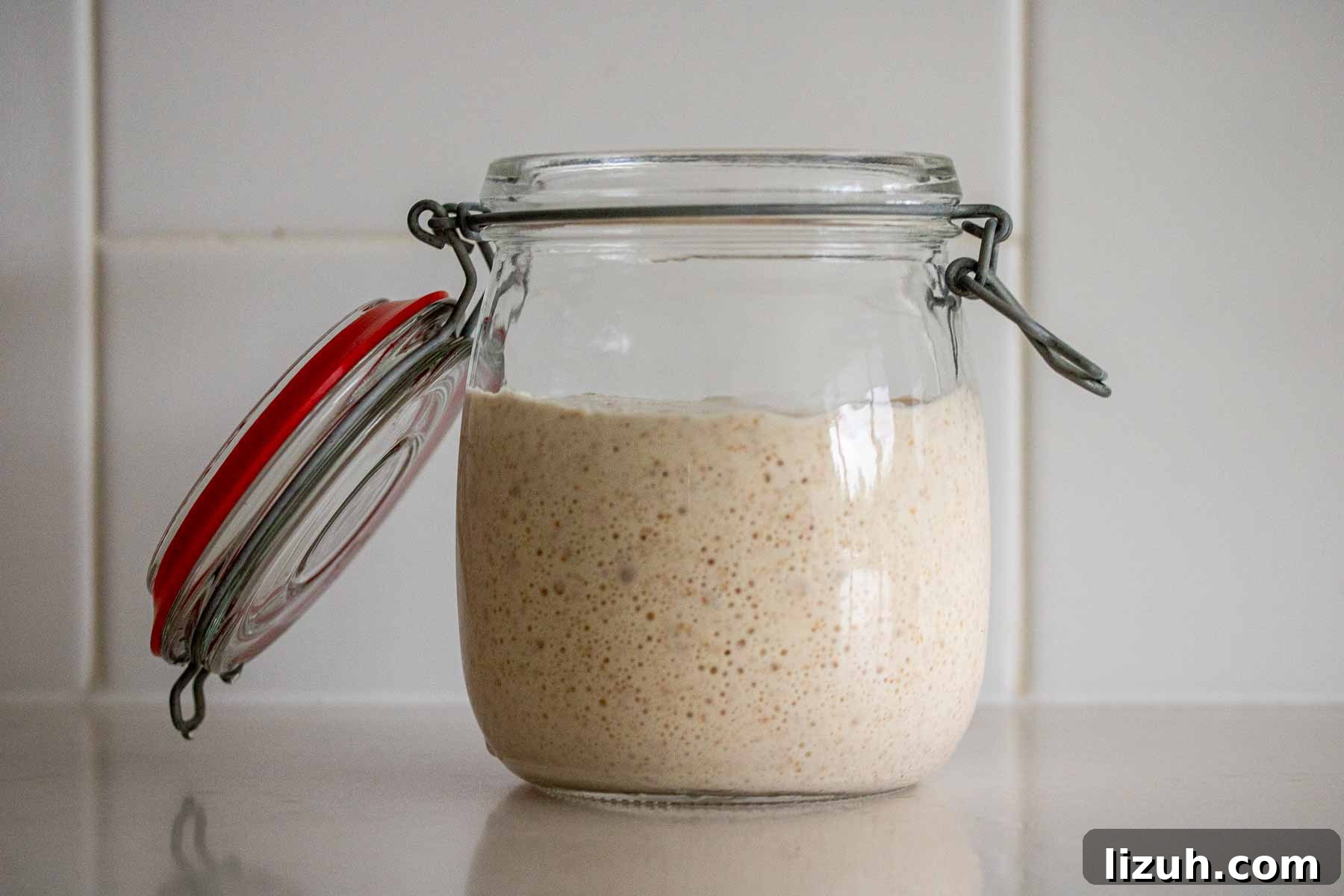
If it is still rising and hasn’t peaked, it’s underproofed.
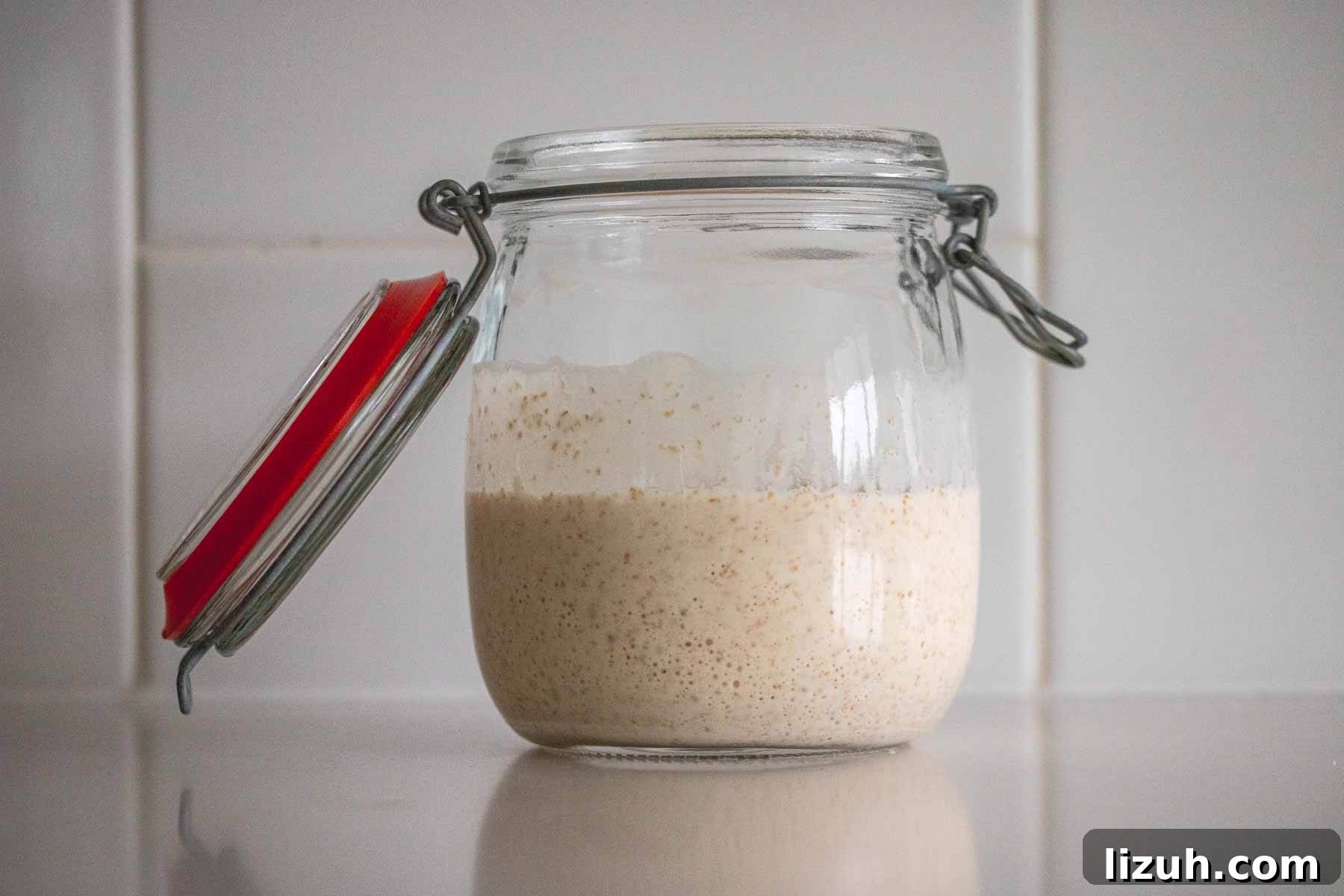
If it has risen and fully collapsed, it is overproofed and the gluten will be weakened.
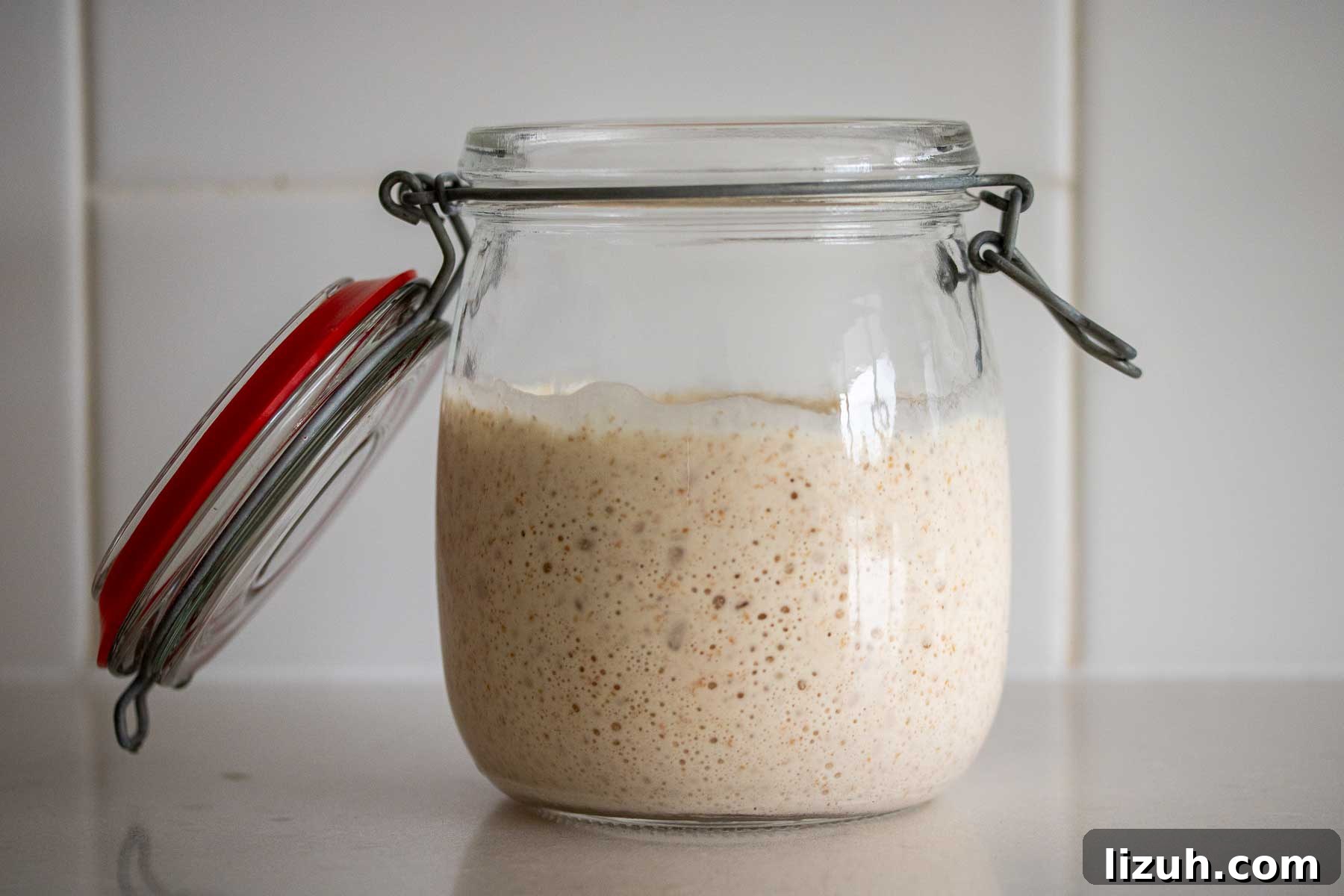
To avoid overproofing, keep poolish out of direct sunlight and away from very warm spots in hot weather. It may take a few tries to get timing right — that’s normal.
Expert tips
- Prefer under-ripe to over-ripe. Over-ripe poolish damages gluten and weakens the final dough structure.
- Limit poolish to 50% or less of the total flour in a dough. Between 10–50% is effective; under 10% has little impact, and over 50% can weaken the dough.
- Try different flours. Poolish works with whole wheat, rye, spelt, and mixed flours for varied flavor and texture.
How to use poolish in a regular bread recipe
Poolish improves baguettes, ciabatta, rustic boules, pizza dough, and focaccia. To adapt an existing recipe, decide what percentage of the total flour you want as poolish (10–50%). Then subtract that flour and the equal amount of water from the main dough ingredients and account for yeast adjustments.
Example adaptation for a basic artisan bread:
Original recipe:
- 500 g bread flour
- 300 g water
- 6 g instant dry yeast
- 10 g salt
If you choose 20% poolish: 20% of 500 g = 100 g flour. Poolish would be 100 g flour + 100 g water + a small amount of yeast (e.g., ~0.1 g for 12–16 hour fermentation).
When adding poolish, reduce the final dough’s commercial yeast a little (2–5 g less than the original), depending on temperature and fermentation time. A possible final dough using about 200 g poolish:
- 200 g poolish
- 400 g bread flour
- 200 g water
- 3 g instant dry yeast
- 10 g salt
Questions you might have
Yes. You generally add less yeast in the final dough than you would without a preferment. Extra yeast makes the final dough rise more predictably.
Yes. Too much yeast, too-long fermentation, or very warm conditions can overproof poolish.
You can, but expect weaker structure and changes to texture and flavor. Overproofed poolish has degraded gluten and may require less additional water in the final dough.
Signs include a rim of product on the container, a very thin, batter-like consistency, and collapse partway down the jar or bowl.
If you tried this Poolish Starter Recipe, please leave a star rating and share how it went in the comments below!
📖 Recipe
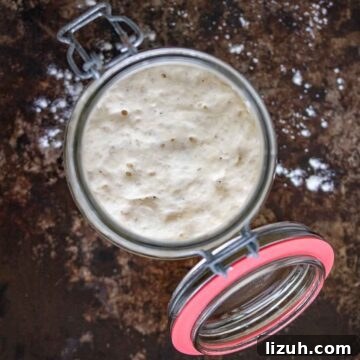
How to make poolish for bread and pizza
Equipment
- 1 clean jar, bottle, or bowl
Ingredients
- 200 g water
- 200 g flour
- pinch of instant yeast
Instructions
- In a clean bowl, whisk together the water, flour, and the pinch of dry yeast until smooth and lump-free.
- Cover with a clean towel, plastic wrap, or a lid to prevent drying. Let ferment at room temperature for the planned time.
- The poolish is ready when it has a small bump on top and begins to sink slightly in the center.
Notes
Prefer under-ripe to over-ripe: Over-ripe poolish weakens gluten and impairs dough handling and structure.
Don’t use more than 50% of poolish in the dough’s total flour weight.
Use different flours: Poolish works well with whole wheat, rye, and spelt.
To prevent overproofing:
- Avoid direct sunlight.
- Don’t leave in very warm spots during hot weather.