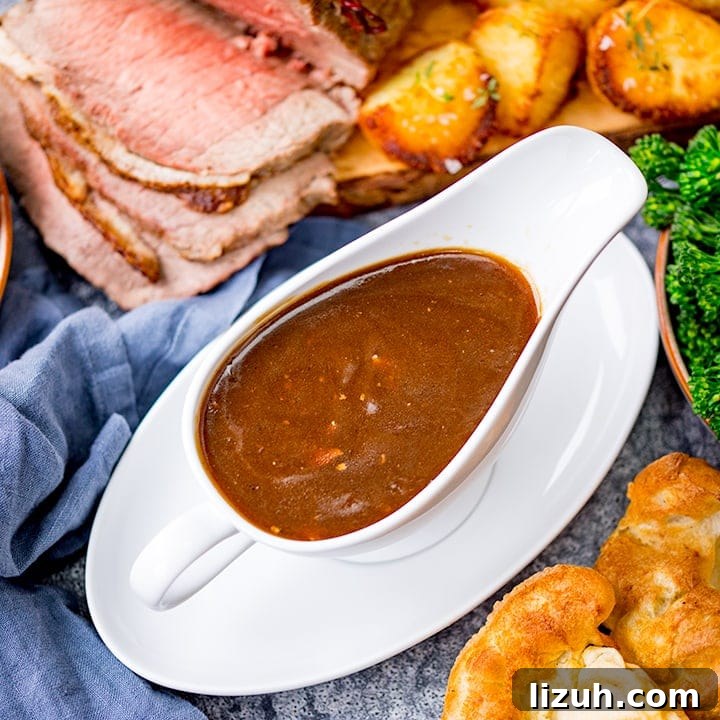
How to make a generous, flavourful gravy. Part of my step-by-step gravy guide with a free time plan for a delicious roast dinner.
“Best Gravy EVER! thanks for the recipe”
– Steve
Nicky’s Notes

I understand the appeal of a light au jus that dresses the meat while keeping the vegetables bright, but I prefer proper gravy — and lots of it. I want it coating roast beef, potatoes and veg, pooling on the plate for dipping, and filling Yorkshire puddings so they spill a gravy river when cut open.
My family feels the same, so when I roast I stretch the gravy to feed everyone while keeping it rich and savoury. This guide shows how to make a large batch of gravy using the juices from roasted meat plus a few pantry boosts.
Table of Contents
- Nicky’s Notes
- Which meat makes the best gravy?
- How to make gravy
- Making gravy without meat juices
- Gravy Recipe
- Roux method
- More Roast Dinner Sides
- Vegetable trivet or not?
- Should I add stock?
- Cornflour or roux?
- Using bones for make-ahead gravy
Which meat makes the best gravy?
Roast Chicken
A good-quality chicken gives excellent gravy. Choose a larger bird for leftovers, ideally free-range. Rub with olive oil and season well before roasting to encourage tasty juices and caramelisation.
Roast Lamb
Lamb leg or shoulder is full-flavoured and naturally fattier, which produces rich gravy. I like adding a little mint sauce to lamb gravy. As with other joints, rub with oil and season well before roasting.
Roast Pork
Pork can be juicy but its pan juices sometimes lack depth. For pork I often boost the juices with a mix of chicken and beef stock (or concentrated liquid stock) to create a balanced flavour. Score and salt the skin well to get crisp crackling.
Roast Beef
A well-marbled joint of beef usually gives the most flavoursome gravy. Look for a joint with a good fat cap and some marbling — ribeye is indulgent, while topside or rump are excellent value. Roast with a splash of oil and generous seasoning to develop deep, caramelised pan juices.
For tougher cuts like brisket, cook low and slow with added liquid such as red wine to ensure plentiful, flavourful pan juices for gravy.
How to make gravy
Full recipe and steps are in the recipe card below.
Basic method (cornflour/cornstarch thickening):
- Heat the meat juices in a roasting tin over direct heat (check the tin is suitable for the hob).
- Add 2–3 crumbled stock cubes or 3 tsp concentrated liquid stock to boost flavour.
- Pour in the hot vegetable water left from boiling or steaming your veg and potatoes, then bring to the boil and season lightly with salt and pepper.
- Whisk in a cornstarch slurry (2 parts cornflour/cornstarch to 5 parts cold water) until the gravy thickens and becomes glossy.
- Let bubble briefly, add any juices collected from the rested meat, check seasoning and adjust.
- Serve immediately, or keep warm and reheat just before serving. If you lack hob space, transfer to a microwave-safe jug and reheat just before serving.
This gravy is part of my roast dinner timeplan — follow the full guide for step-by-step timing to serve everything hot together.
Making gravy when you haven’t got any meat juices (e.g. for sausages)
If you don’t have roast juices, here are reliable options that avoid instant granules:
- Use homemade frozen stock made from saved bones — it makes a superior base.
- Make an onion gravy: caramelise a sliced onion with 1 tsp light brown sugar and 2 tbsp butter for 15–20 minutes, add 2 tbsp flour, cook for 2 minutes, then gradually add 2 cups (approx 420ml) hot beef stock while stirring until thickened. Finish with Worcestershire sauce, salt and pepper.
- Blend stock cubes: dissolve a mixture of chicken and beef stock cubes in boiling water (one cube per 240ml) for balanced flavour. Bring to the boil and thicken with a cornstarch slurry as above.
Gravy Recipe
Ingredients
- Meat juices from your roasted meat
- 2–3 crumbled stock cubes (chicken, beef or lamb depending on the roast) or 3 tsp concentrated liquid stock
- 720 ml (3 cups) hot vegetable stock from your boiled/steamed vegetables and potatoes
- 1/4 tsp salt
- 1/4 tsp black pepper
- 2 tbsp cornflour/cornstarch
- 5 tbsp cold water
- 1/4 tsp gravy browning (optional)
Instructions
- Heat the meat juices in the roasting tin (ensure the tin can take direct heat).
- Sprinkle in the crumbled stock cubes or add liquid stock and stir to dissolve.
- Pour in the hot vegetable water, bring to the boil, and season lightly with salt and pepper.
- Mix the cornflour/cornstarch with the cold water to make a smooth slurry, then whisk it into the boiling liquid until the gravy thickens and shines.
- Allow to bubble briefly. Add any additional juices from the rested meat and check seasoning, adjusting salt and pepper as needed.
- Optionally stir in gravy browning for a deeper colour.
- Serve immediately or turn off the heat and reheat just before serving. If you need to save hob space, transfer to a microwave-safe jug and reheat before serving.
Notes
Roux method:
Ingredients:
- Meat juices from your roasted meat
- 2 tbsp plain (all-purpose) flour
- 2–3 crumbled stock cubes or 3 tsp concentrated liquid stock
- 720 ml hot vegetable stock (from boiled/steamed veg and potatoes)
- 1/4 tsp salt
- 1/4 tsp black pepper
- 1/4 tsp gravy browning (optional)
Instructions:
- Heat the meat juices in the roasting tin.
- Sprinkle over the flour and whisk to form a paste (roux).
- In a jug, dissolve the crumbled stock cubes in the hot vegetable stock. Slowly pour this into the roux while whisking constantly.
- Add any extra meat juices from the rested meat, bring to the boil, and stir until the gravy thickens.
- Season with salt and pepper. Add gravy browning if you want a darker colour. Serve immediately or keep warm and reheat before serving.
Nutritional information is per serving and is approximate.
Nutrition
|
Carbohydrates: 4g
|
Fat: 4g
|
Sodium: 887mg
|
Sugar: 1g
Nutrition information is approximate and should be used as a guide.
This roast dinner gravy recipe was first posted in May 2019 and has been updated with improvements and clarity.
🍲 More Roast Dinner Sides
Roast Dinner
The Best Crispy Roast Potatoes
Sides
Honey Roasted Carrots
Roast Dinner
The Best Yorkshire Pudding Recipe
Sides
The Best Mashed Potatoes
Sides
Easy Cauliflower Cheese
Sides
Garlic Green Beans with Parmesan
Vegetable trivet or not?
Some cooks roast meat on a bed of onions and carrots to keep the base moist and to impart flavour when those vegetables caramelise. I usually prefer the meat to sit directly on the tin so the juices caramelise on the pan base — those darkened bits add excellent flavour to the gravy. I reserve a trivet for long, slow cooks like brisket or very large joints such as turkey, where extra moisture and protection help the meat.
Should I add stock cubes/stock pots/concentrated liquid stock?
Yes. Meat juices are concentrated but won’t make enough liquid on their own for a big family roast. Adding vegetable water from steaming and a couple of crumbled stock cubes (or concentrated liquid stock) extends the volume and keeps the meat flavour prominent. Use chicken or beef cubes at one cube per 240ml water, or use a high-quality concentrated liquid stock for a gluten-free option if needed.
Cornflour/cornstarch method or the roux method?
I prefer the cornflour/cornstarch slurry because it’s forgiving: add the liquids first to judge volume, then thicken to the desired consistency. It gives a glossy gravy and is naturally gluten free when you use gluten-free stock. The roux method is traditional and fine if you cook the flour fully and add stock slowly, but it can go wrong for some home cooks (lumpy gravy or raw flour taste) if not handled carefully. Both methods are included above and in the recipe card.
Using bones for gravy (brilliant for make-ahead gravy)
Save bones (chicken carcasses, lamb or beef bones) in the freezer. When you have a few, simmer them in a large pot with roughly chopped onions, carrots, a stick of celery and 1/2 tsp each salt and pepper. Cover with water, bring to the boil and then simmer for 3–4 hours until reduced by about three-quarters. Strain, squeeze the solids to extract liquid, cool and freeze. This homemade stock is excellent for soups or for making gravy quickly by thickening with a cornstarch slurry and seasoning to taste.
Some links in the original article may be affiliate links. Nutrition information is approximate. For full terms see the original site.