Over decades, especially in family-run businesses that pass through generations, many decisions accumulate — guided by intuition, common sense, good intentions and the grit required to survive when small. That organic growth can leave a company rich in history but sometimes lacking cohesion and clarity for long-term direction.
In 2015, after 67 years in business, Dr. Bronner’s paused to reflect: what are we doing, how do the parts connect, and where are we headed? The company’s origins were unusual. Emanuel Bronner founded the business not merely to sell soap but to spread a message of peace, unity, personal responsibility and care for the planet. The soap served as the messenger for that message. With that activist core and a high-quality product, the company needed a clear statement tying purpose, operations and advocacy together.
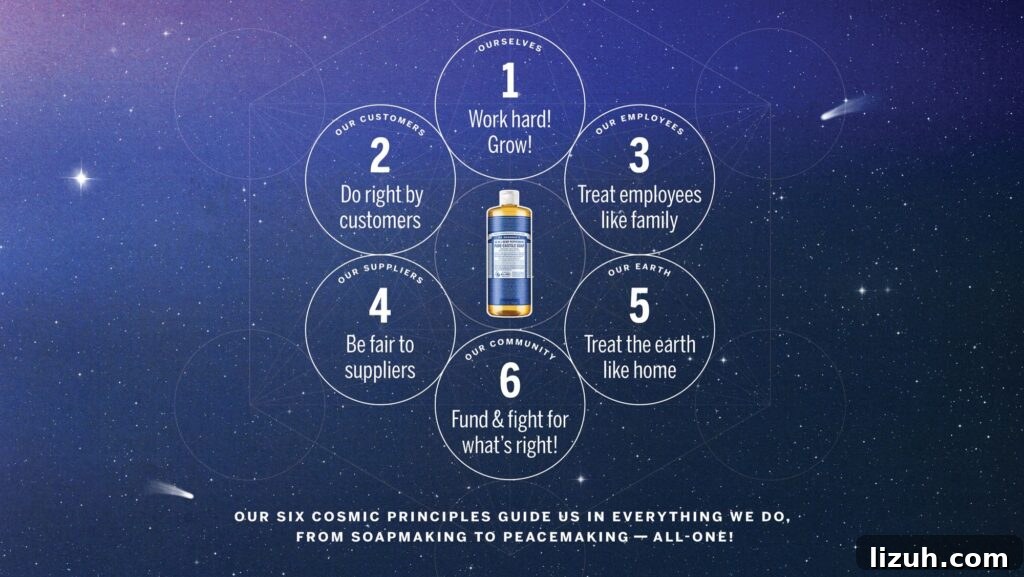
A cross-functional group of employees and leaders spent months listening, debating and refining a purpose statement. Early drafts included catchy but vague options like the “6 P’s” (Production, People, Planet, Passion…), but the team ultimately developed six clear guiding tenets known as the Cosmic Principles. Alongside the written principles, they created a visual diagram showing how a strong business center benefits the earth and people across the supply chain — how a local customer can positively affect a farmer halfway around the world, and how external activism supports employees at headquarters. These principles became a practical guide for decision-making and a steadying center for the company’s work.
The Cosmic Principles debuted in Dr. Bronner’s first corporate social responsibility report — the All-One! Report — which collected the company’s actions, values and impact into one annual statement. For many employees and leaders, that inaugural 2015 report crystallized how business, activism and ethics can align and inspired the question: if one small-to-medium soap company can do so much good, what might happen if many companies acted similarly?
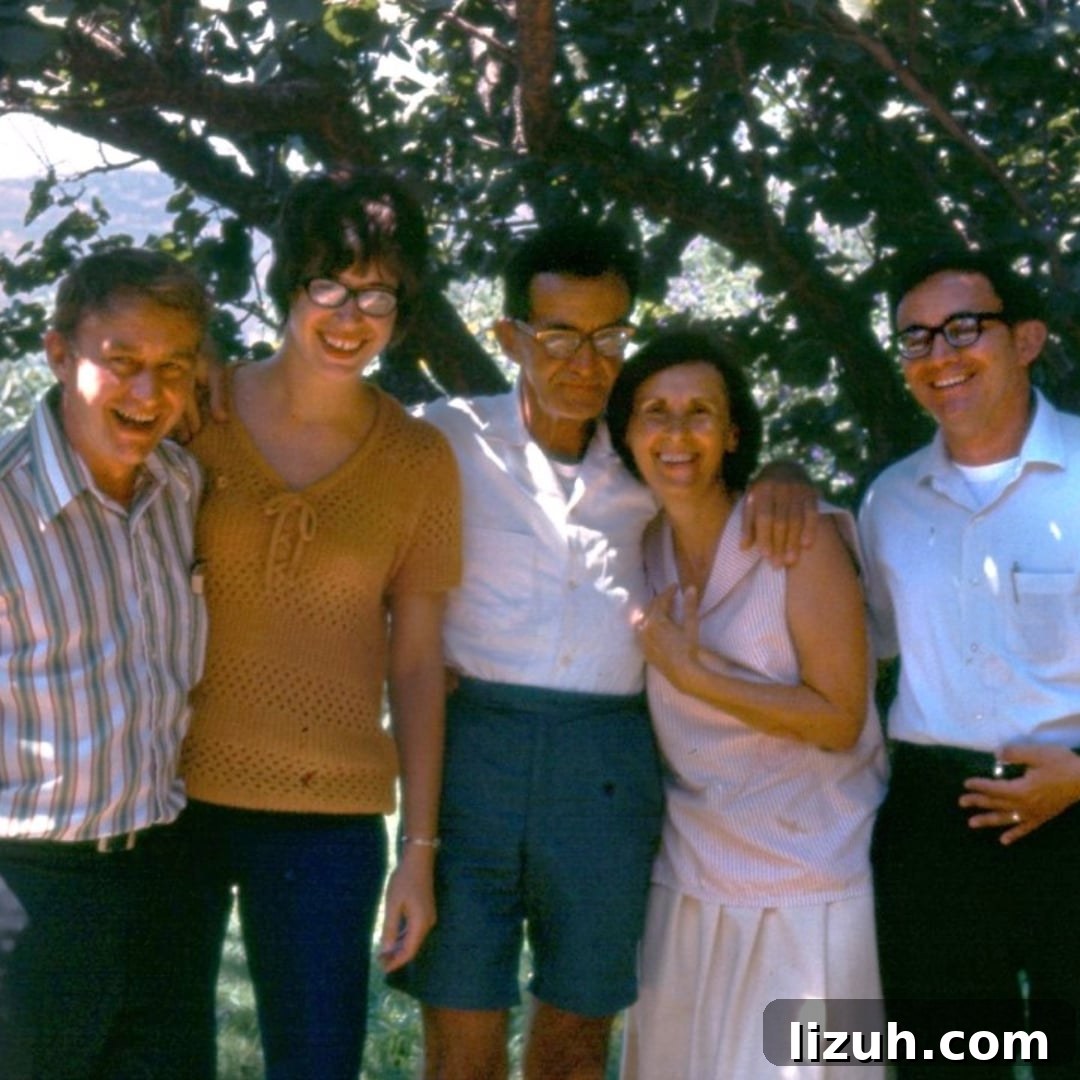
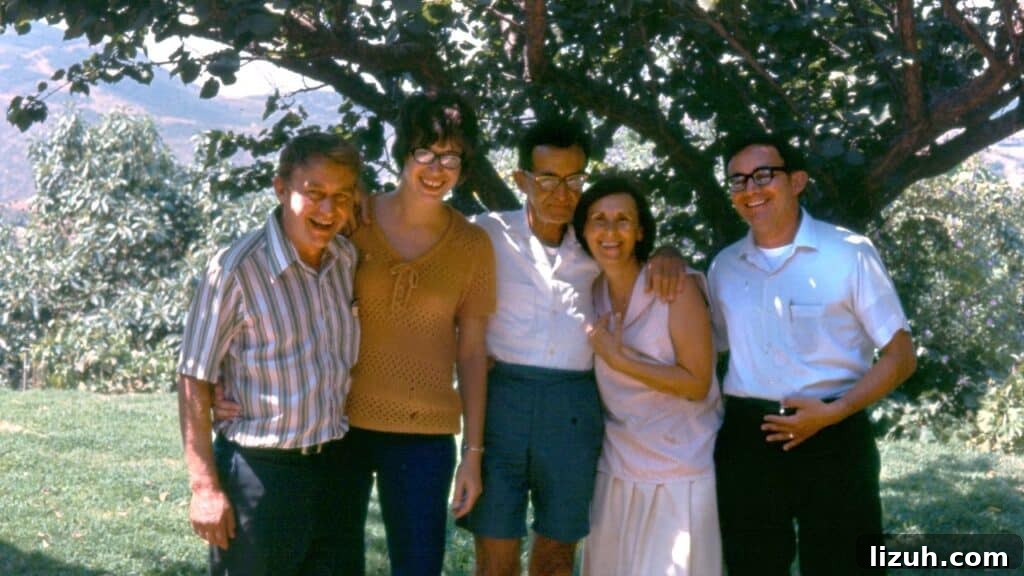
Although I didn’t participate directly in crafting the principles, I recognize my grandfather’s voice in the language and my parents’ values in how they’ve been enacted. The principles reflect the family and company culture I grew up around — expectations and benefits at work that closely mirror those at home.
A “Who’s Who” of Dr. Bronner’s Family Leadership
Here are the family members who shaped the company over the years.
Emanuel Bronner (1908–1997) founded Dr. Bronner’s in 1948 to promote his vision of unity and care for the world. He was an intense, focused organizer who carried his message on every label and continued his work despite health challenges later in life.
Jim Bronner (1938–1998), Emanuel’s youngest child, served as President during his father’s decline. With limited formal schooling but strong instincts, a solid work ethic and compassion, Jim helped translate Emanuel’s life work into a sustainable organization during a critical transition.
Trudy Bronner (1943– ) brought analytical rigor and attention to detail. With a background in mathematics and teaching, she tempered impulsive decisions with careful thought and remains Chief Financial Officer.
Ralph Bronner (1936–2015) was the company’s longtime sales force and heartfelt ambassador, traveling extensively to tell the soap’s story and build relationships in small health stores and communities. His generosity and ability to connect with people were legendary.
David Bronner (1973– ) joined in 1997 and has led the company as CEO, driving growth, advocacy and commitments to sustainable, ethical sourcing and certifications.
Mike Bronner (1975– ), company President, focused on international markets and building relationships with partners across more than 40 countries.
Michael Milam (1971– ), Chief Operations Officer and my husband, joined in 2005 to systematize operations, enabling the company to sustain growth with efficient systems.
The Six Cosmic Principles
Cosmic Principle #1: Work hard! Grow!
This principle underscores that a healthy business is the foundation for everything else. Emanuel Bronner’s determination built the company under difficult conditions: a nascent natural products industry, limited sales channels and personal health challenges. After his passing, the company faced steep estate taxes and transitional challenges that required rigorous attention to detail, cost management and perseverance to survive and thrive.
That ethic continues: Dr. Bronner’s pursues operational improvements while maintaining ethical sourcing and sustainability commitments. Strong business fundamentals have allowed the company to remain profitable while advancing initiatives like ethical palm oil, fair-trade chocolate and Regenerative Organic Certification.
Cosmic Principle #2: Do right by customers.
Customer trust has always mattered. Emanuel placed his personal phone number on labels so people could call with questions or to discuss the message. Ralph continued building personal connections with customers in stores and on the road. Under later leadership, the company pursued third-party certifications — organic, fair trade and regenerative standards — to verify claims and provide transparency.
Open, honest communication and responsiveness guide the company’s customer service, certification choices and outreach. Strong customer relationships remain central to the company’s mission.
Cosmic Principle #3: Treat employees like family.
Employees are essential partners in making soap and sharing the brand’s message. Longtime staff recount how Emanuel treated colleagues as partners; that spirit of interdependence — Constructive Capitalism — endures. The company culture reflects hospitality and care similar to what I experienced growing up: shared meals, inclusion, celebrations and support.
Practically, this principle shows up in policies like an executive salary cap and comprehensive benefits. The result is low employee turnover compared with industry averages, indicating strong retention and a workplace people choose to stay in.
Cosmic Principle #4: Be fair to suppliers.
Suppliers — the farmers and communities producing raw materials — are as critical as any in the value chain. Over time, the company increased visibility into supply chains and recognized that organic standards alone did not protect people. In 2005, Dr. Bronner’s committed to sourcing major materials from organic and fair trade operations, which required creating and supporting supplier partners where fair trade supply chains did not yet exist.
That led to collaborations like Serendipol in Sri Lanka, Serendipalm in Ghana and Serendi-Coco in Samoa, plus projects for olive and mint oil. Being fair to suppliers means fair prices, transparent relationships, safe working conditions, equitable practices and care for communities — an ethic rooted in refusing to exploit positions of power and aiming to improve people’s lives.

Cosmic Principle #5: Treat the earth like home.
Environmental stewardship was a core value long before it became popular. Emanuel prioritized plant-based ingredients over emerging synthetic alternatives. Today, the company pursues regenerative organic practices that not only avoid harm but rebuild soil and sequester carbon through agroforestry, cover cropping, composting and related methods.
At headquarters, solar panels, on-site wastewater treatment and waste-reduction measures illustrate practical commitments. Dr. Bronner’s pioneered the use of 100% post-consumer recycled plastic bottles and, after life-cycle analysis, introduced a paper refill carton for quart-sized Castile soap while piloting refill systems in retail and community settings.
Caring for the smaller “oikos” — our homes and communities — scales to caring for the larger “oikos” of the planet. Individual choices add up to meaningful impact.
Cosmic Principle #6: Fund and fight for what’s right.
Advocacy and philanthropy were Emanuel’s starting point and remain central. The family has prioritized giving even in difficult times — for example, donating funds to create the James A. Bronner Family Branch of the Boys & Girls Club instead of selling assets to cover taxes during a transition. The company supports causes that align with its values, from youth services and social welfare to policy advocacy on living wages, GMO labeling, ingredient transparency and drug policy reform.
On average, the company directs a meaningful share of revenue toward charitable causes annually, reflecting a long-standing practice of noticing need and helping where possible.
Conclusion
While the language of the Cosmic Principles echoes Emanuel Bronner, their application reflects the lived values of subsequent generations. The principles tie together the family’s values, business practices and activism into a coherent framework that guides decisions and measures impact.
They’re summed up in the phrase printed on every bottle: “In all we do, let us be fair, generous, and loving to Spaceship Earth and all its inhabitants. For we’re All-One or None! All-One!”
These reflections show how family values and principled business can shape lasting organizational culture and influence. I hope they illustrate what’s possible when companies center ethics, care and stewardship in how they operate.
Further reading:
- Five Generations of Soapmakers Built Dr. Bronner’s
- Soap & Soul Historical Photos
- How the Label Was Born