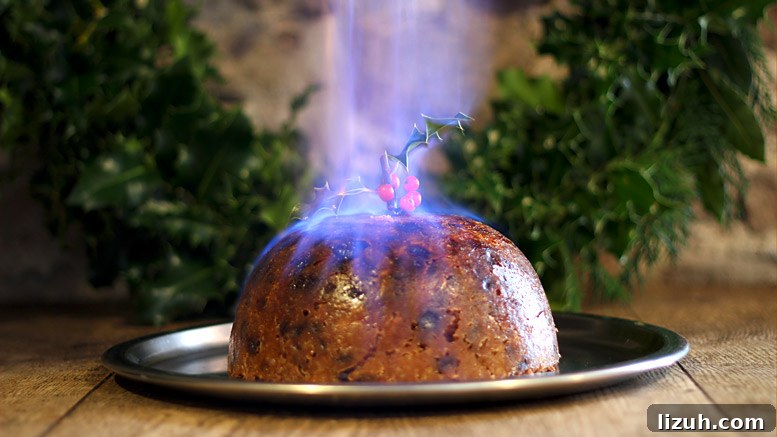
Christmas Pudding Masterclass – Making The Perfect Christmas Pudding
Traditional Christmas puddings are usually prepared well before Christmas Day. Many families observe “Stir-Up Sunday,” the final Sunday before Advent, at the end of November. This is commonly regarded as the last suitable day to mix puddings and cakes that benefit from long maturation — a good Christmas pudding can be aged for many months to develop its flavour. On Stir-Up Sunday each family member takes a turn stirring the pudding mixture and makes a wish while a silver coin is dropped into the mix for luck.
In Christian households the stirring is often done from east to west, honoring the journey of the Magi. While stirring, someone may recite: “Stir up, we beseech thee, O Lord, the wills of thy faithful people; that they, plenteously bringing forth the fruit of good works, may by thee be plenteously rewarded; through Jesus Christ our Lord. Amen.” This tradition links the act of preparing the pudding to prayer and thanksgiving.
Christian traditions surrounding the Christmas pudding
Thirteen ingredients: Many classic recipes use thirteen ingredients, a number thought to represent Christ and his twelve disciples. This connection has helped cement the thirteen-ingredient pudding as a traditional favourite. For those who prefer a classic version, traditional royal and family recipes follow this convention, using dried fruits, spices, suet or butter, breadcrumbs, sugar, eggs, and alcohol or treacle to bind and preserve the pudding during maturation.
Stir-Up Sunday explained: On this day the household joins together to stir the mixture for luck and good wishes. Stirring from east to west commemorates the Magi’s journey, and the recited prayer ties the custom to Christian observance. The ritual is as much about family, hope and continuity as it is about the finished pudding.
Pagan and folk traditions associated with the pudding
The coin: Hiding a silver coin in the pudding is a centuries-old custom meant to bring fortune to whoever finds it in their serving. It can also symbolize prosperity and good luck for the coming year.
The holly branch: Including an evergreen sprig with the pudding or using holly in the presentation reflects older, pre-Christian seasonal beliefs. The evergreen represents the cycle of life, rebirth and resilience through winter, serving as a reminder that the cold season ends and life renews in spring. Many people value this symbol for its message of continuity and hope at a time of year focused on family and reflection.
Whether observed as a Christian rite, a piece of folk heritage, or simply a comforting culinary tradition, the Christmas pudding carries layers of meaning. Preparing and sharing a pudding connects generations, preserves recipes and rituals, and adds a flavorful, symbolic centrepiece to holiday celebrations.