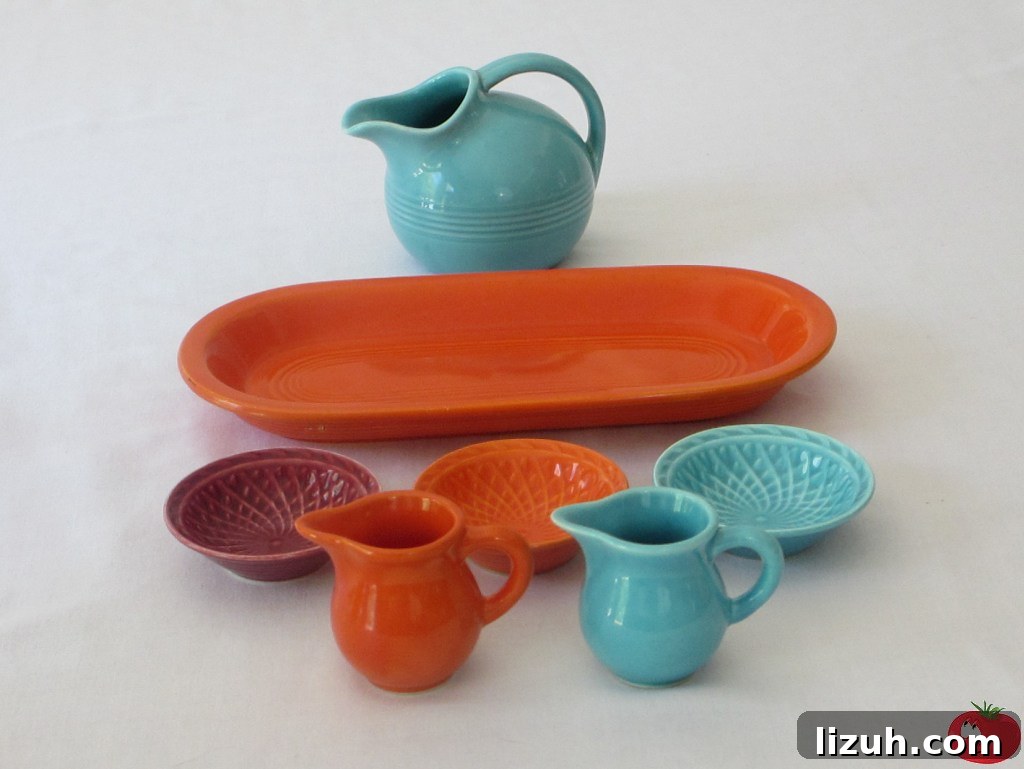
Here are some of my Harlequin pieces paired with a red Fiesta utility tray. At the top is a turquoise Harlequin novelty creamer. The novelty creamer was produced by the Homer Laughlin China Company from 1938 through 1959 and is a charming example of the company’s mid-century novelty shapes and glazes.
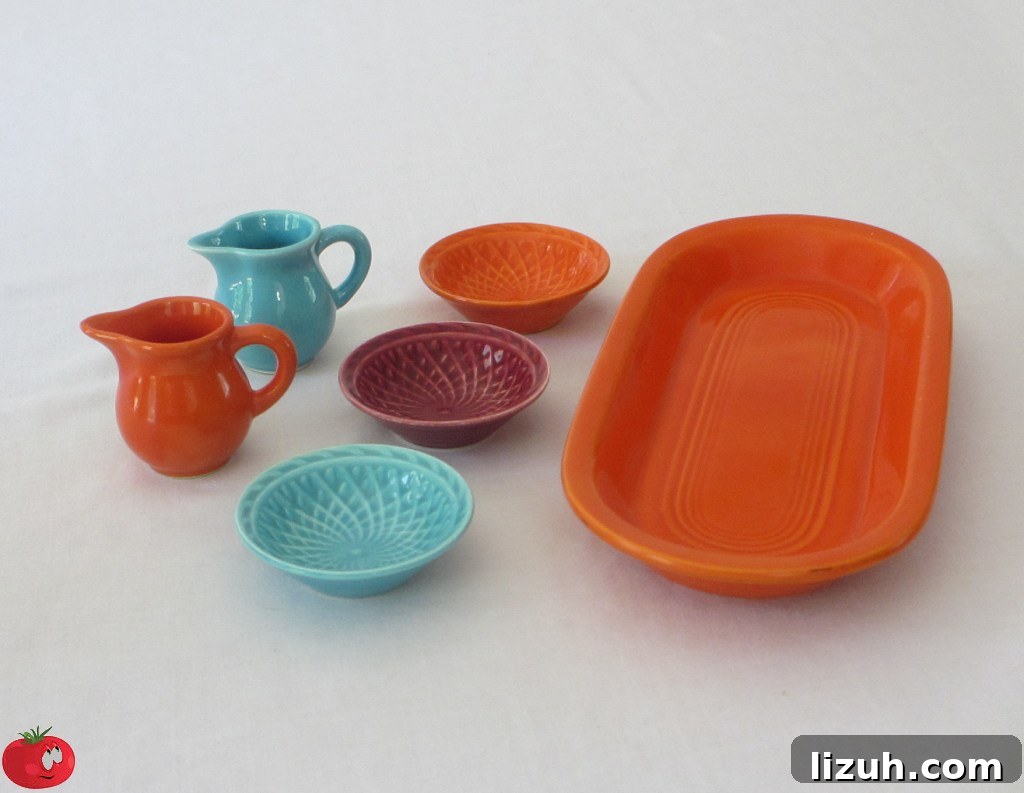
The red Fiesta utility tray was made from 1936 through 1946. These trays were versatile: they served as bases for sugar and creamer sets and were commonly used to present celery or carrot sticks, relishes and other condiments at the table.
My basketweave nut dishes come in maroon, red and turquoise. While some collectors have assumed these were intended as individual ashtrays, they were marketed as nut dishes. The shape was adapted from a Japanese Marutomo ware dish. Production of the basketweave nut dish began in 1938 and ended in 1943.
One of my favorite Harlequin pieces is the small individual or “toy” creamer. Although these small creamers were dipped in Harlequin glazes, most experts do not consider them part of the official Harlequin line. They were produced between 1939 and 1942; my examples are in red and turquoise.
If you enjoy these pieces, you might also like my post about a Homer Laughlin Kitchen Kraft covered jar, which highlights another distinct line from the same manufacturer and era.
Collecting Harlequin and Fiesta pieces offers a fascinating look at American ceramic design from the 1930s through the 1950s. The bright glazes and playful shapes reflect the era’s interest in cheerful, functional dinnerware that could brighten everyday life. Harlequin pieces, with their novelty forms and distinctive glazes, complement the more widely known Fiesta shapes and colors. Many collectors appreciate how the two lines intersect—both in shared glazes and in the occasional crossover pieces like individual creamers dipped in Harlequin colors.
When assessing vintage Homer Laughlin pieces, consider glaze condition, chips, crazing and any maker’s marks on the underside. Original colors, especially early shades, can influence a piece’s desirability among collectors. Documenting production dates—such as the utility tray (1936–1946), novelty creamer (1938–1959), basketweave nut dishes (1938–1943) and individual creamers (1939–1942)—helps place each item in historical context and aids accurate identification.
Whether you collect for display, daily use or historical interest, Harlequin and Fiesta dinnerware continue to be admired for their design, color and craftsmanship. These pieces provide a vivid connection to mid-century American tableware and are enjoyable to hunt for and preserve.