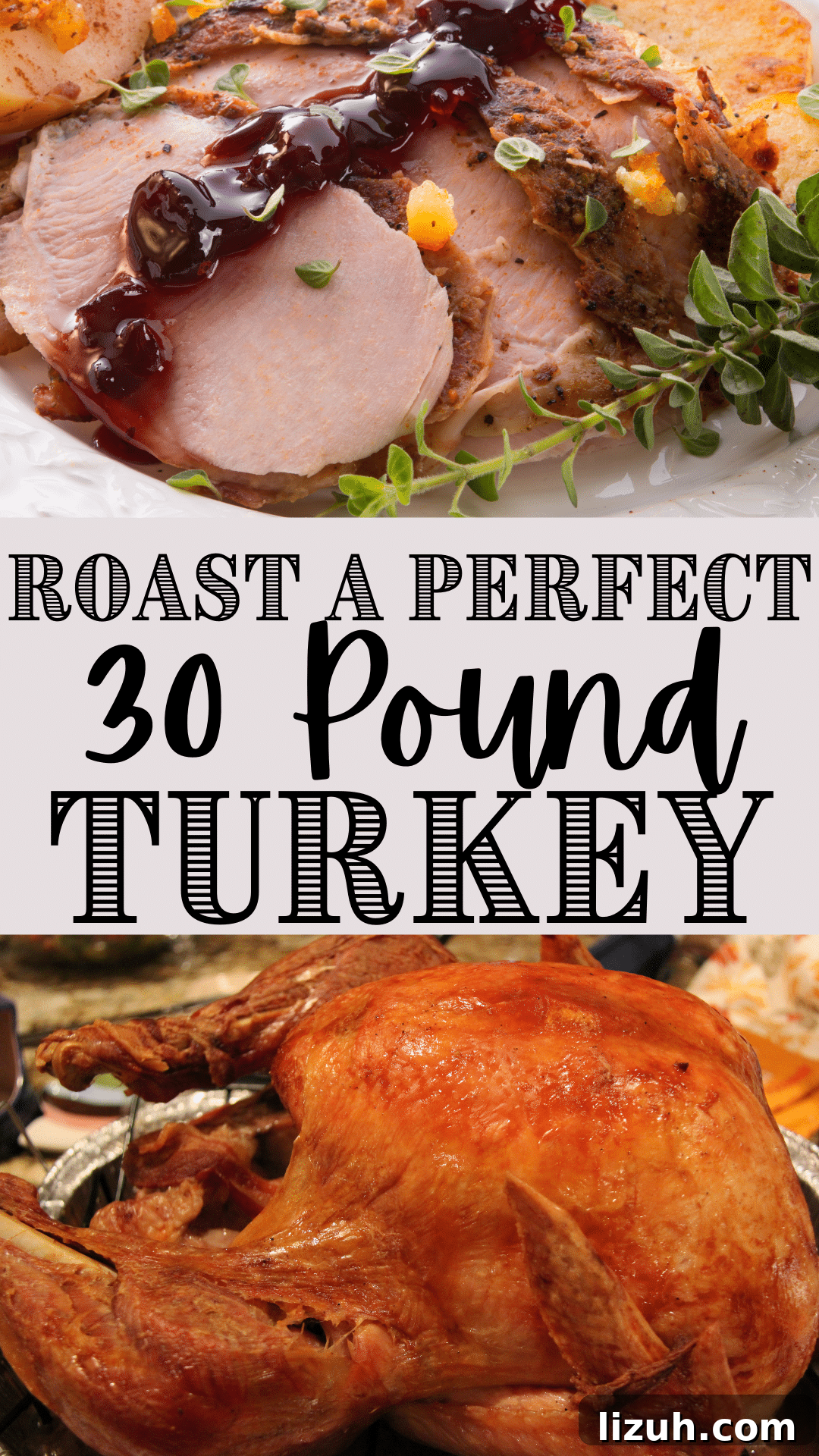
Cooking a 30 pound Turkey is different from cooking a 15-20 pound bird. A 30-pound turkey serves many people and requires different planning, equipment, and timing to achieve crisp skin and tender meat without drying the outer portions.
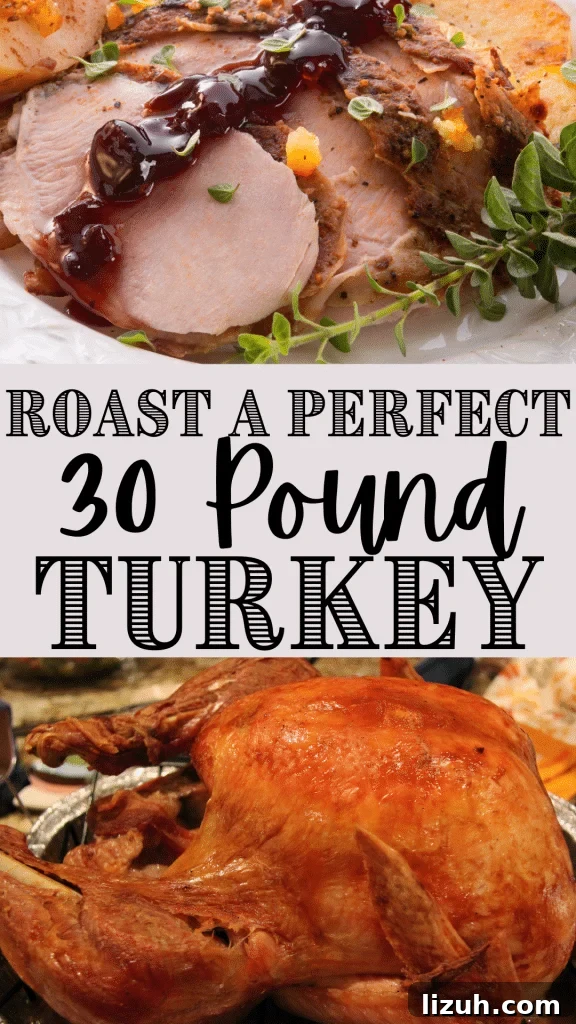
Cooking a 30lb Turkey
To roast a 30-pound turkey successfully you’ll need a large shallow roasting pan and a reliable meat thermometer. The turkey is done when the internal temperature at the thickest part of the breast and thigh reaches 165°F.
Below are clear steps, timing, and useful tips to help you roast a large turkey for Thanksgiving, Christmas, or any big gathering. Proper prep and a steady, moderate oven temperature will give you crispy skin and evenly cooked meat.
Defrost Frozen Turkey
Defrosting a 30-pound turkey takes considerably longer than a smaller bird. In the refrigerator, allow 24 hours per 4 pounds—so plan on about 8 full days in the fridge before cooking. Place the turkey on a tray to catch any drips while it thaws.
Cold Water Thawing
If you need to thaw faster, you can use the cold-water method, but this requires a very large sink or container and frequent water changes. Submerge the turkey in cool water and refresh the water every 30 minutes. Expect roughly 30 minutes per pound—about 15 hours total for a 30-pound turkey—so this method still takes significant time and attention.
Room Temperature
If the turkey has been thawed in the refrigerator, remove it about an hour before roasting to take the chill off and make it easier to prepare. Do not leave it at room temperature for long periods beyond that hour for food safety.
Cooking Time
For such a large bird, set your oven rack low and preheat to 325°F. A lower oven temperature helps the interior reach a safe temperature without overcooking the outer meat. Cooking times vary by whether the turkey is stuffed.
An unstuffed 30-pound turkey typically roasts for about 5–6 hours. If stuffed, plan for approximately 6–6.5 hours. Start checking the internal temperature about three-quarters of the way through cooking and then every 10–15 minutes until the thickest part of the thigh and breast reaches 165°F.
Fresh turkeys save defrosting time since they don’t require the long thaw period frozen birds do. Still, roast at 325°F and use a thermometer to confirm doneness rather than relying on color or juice clarity.
Tools
Paper Towels
Keep paper towels and a disinfectant handy to clean up any drips while prepping and after thawing in the sink. A clean workspace makes handling a large bird safer and easier.
Use an extra-large roasting pan—look for something around 18×24 inches—and heavy-duty aluminum foil to build up sides or cover the turkey during the early part of roasting.
Instant-Read Thermometer
A reliable meat thermometer is essential when roasting large turkeys. Insert the thermometer into the thickest part of the thigh and the thickest part of the breast without touching bone. When both locations reach 165°F, the turkey is safe to eat.
Do not judge doneness by color or by cutting the bird to check juices; doing so releases juices and can lead to dry meat. Some turkeys can retain pink hues even when fully cooked, so temperature is the only reliable indicator.
Convection Oven
A standard 30-inch oven may be a tight fit for a 30-pound turkey. A larger single oven is preferable; double ovens are usually too small for such a large bird. Plan ahead to ensure your turkey fits comfortably with room for air circulation.
Directions
How to Cook a 30 Pound Turkey — Step by Step
PREP TURKEY
Remove all packaging, the neck, and any giblets from the cavity. Place the turkey breast-side up in a large shallow roasting pan. Rub softened salted butter evenly over the skin to help brown the surface and add flavor.
Avoid pushing large amounts of seasoning under the skin of the breast; this can cause the skin to shrink away during roasting and expose the meat. If you want extra flavor under the skin, use minimal, finely chopped herbs or a thin layer of seasoned butter.
STUFF SMALL HOLE WITH APPLE TO KEEP BREAST MOIST
Placing a halved apple or other aromatics in the neck cavity can help keep the breast meat moist and add a subtle flavor without filling the main cavity with heavy stuffing that slows cooking.
STUFFING
For large turkeys, I recommend cooking stuffing separately in a casserole dish. Stuffing inside the bird increases cooking time and can become unevenly cooked or soggy. Prepare stuffing in a baking dish with stock, sautéed onions and celery, and optional sausage for a flavorful side.
AROMATICS
If you’re not filling the cavity with stuffing, place aromatics such as large pieces of onion, celery stalks, carrots, fresh herbs (thyme, rosemary), salt, and pepper inside the cavity to flavor the meat and pan drippings. You can also place aromatics under the roasting rack and add about 2 cups of cold water to the pan to prevent burning and to capture flavorful drippings for gravy.
If you plan to baste, add about half a cube of butter to the bottom of the pan so you can spoon melted butter over the bird during roasting.
COVER (THEN UNCOVER) TURKEY
Loosely tent the turkey with aluminum foil (shiny side out) to prevent the skin from browning too quickly and to keep moisture in. Remove the foil about halfway through the total roasting time so the skin can brown and crisp for the final hours.
ROAST TURKEY
Place the covered turkey in the preheated oven on the lowest rack. Roast covered for the first portion of the cooking time—about three hours—then remove the foil and continue roasting uncovered until an instant-read thermometer reaches 165°F in the thickest parts of the breast and thigh. Remove from oven and transfer the pan to a protected surface for resting.
REST BEFORE CARVING
Let the turkey rest, uncovered, for at least 20 minutes after it reaches 165°F. Resting allows juices to redistribute and be reabsorbed, producing moister slices and easier carving. Use this time to finish gravy and arrange side dishes.
USING A MEAT THERMOMETER
Use either an instant-read thermometer or a remote probe thermometer placed before roasting. Insert the probe into the thickest part of the breast and the thigh without touching the bone. When both read 165°F, the turkey is safe to serve. Remove carefully, rest, then carve and serve.