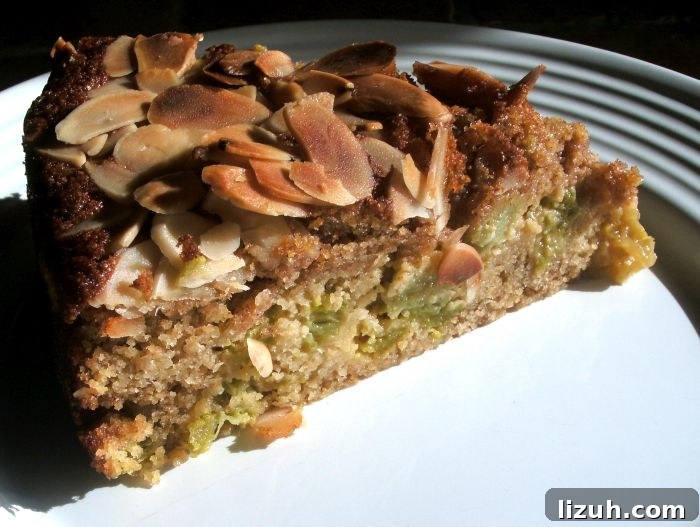
When I posted this picture on Twitter, I wasn’t prepared for the reaction.
Clearly the idea and the picture caught people’s attention. Some of the responses made me laugh:
…god that cake looks good. I just licked the laptop screen…
Many readers asked for the recipe.
I would love to read the whole thing on your blog, hint hint….
After sharing the photo, the feedback kept coming.
This from international chef and author Gregoire Michaud at the Four Seasons Hotel in Hong Kong:
…you should definitely try Carl’s rhubarb and ginger cake – if not THE one, it has to be one of the best recipe of what you can do with rhubarb: awesome!
And this from Sue Daws, whose husband normally dislikes rhubarb:
Cake was a big hit! OH ate rhubarb and loved it!
Finally, a note from Jono Stevens:
OH reckons it’s ‘one of the best cakes I’ve ever tasted’, so you earnt me some brownie points too. 🙂
So, here is the recipe…
Rhubarb polenta cake recipe
This recipe is adapted from Nigella Lawson’s Rhubarb Cornmeal Cake in How To Be A Domestic Goddess. I’ve changed it significantly: we’ve made this cake many times and it’s become a family favourite, a great way to celebrate rhubarb in spring. The slight crunch of polenta pairs nicely with soft rhubarb.
I wanted more complexity, so I added ingredients that complement each other. Rhubarb and ginger are a classic match; I use crystallised ginger in chunky dice to give small bursts of spicy sweetness and a firmer texture against the rhubarb. Nigella’s original includes cinnamon; I add ground cardamom for a subtle background warmth.
Almonds add extra crunch and flavour in the topping. I reduced the sugar and substituted some plain flour with light rye flour for a gentle nutty note that complements the rhubarb. Together these elements create a balanced, flavorful cake.
Here’s how to make it.
Ingredients
500g rhubarb (washed and dried if needed), sliced about 5mm thick
250g golden caster sugar (total)
75g crystallised ginger, roughly 5mm dice
100g plain flour
50g light rye flour (optional—use plain flour if unavailable)
1 tsp bicarbonate of soda
Pinch of salt
2 tsp ground cinnamon
1/2 to 1 tsp ground cardamom
155g fine polenta (cornmeal)
2 large free-range eggs
1 tsp vanilla extract (use real vanilla extract rather than imitation)
125g unsalted butter, softened
250g natural yogurt
100g flaked almonds
You’ll need a 23cm springform tin (or similar) lined on the bottom and sides with greaseproof paper.
Method
Preheat the oven to 180°C (356°F) with a shelf in the middle.
Place the rhubarb in a non-metallic bowl with 100g of the sugar and the crystallised ginger; stir gently. If you won’t be ready to finish the rest of the preparation within 30 minutes, leave this step until closer to baking—longer resting releases too much juice from the rhubarb.
Sift the flours, polenta, bicarbonate, salt, cinnamon and cardamom into a bowl and mix gently.
Whisk the eggs with the vanilla in a separate bowl.
Cream the remaining sugar with the softened butter using a mixer or by hand.
Gradually add the egg and vanilla mixture to the creamed butter and sugar, beating gently as you combine.
Alternate adding parts of the flour and spice mixture with spoonfuls of yogurt, beating gently until the batter is combined.
Fold the rhubarb and crystallised ginger through the batter until evenly distributed.
Pour the batter into the prepared tin and smooth the top. Scatter the flaked almonds evenly over the surface.
Bake for about an hour, until the cake feels springy to the touch and a skewer inserted in the center comes out clean.
About 20 minutes into baking the almonds may colour quickly. When they reach a golden tone, cover the cake loosely with foil or greaseproof paper to prevent burning.
Remove the cake from the oven and allow it to cool in the tin on a rack. Once cool enough to handle, release the springform, remove the lining paper, and transfer the cake to your preferred serving plate.
This cake is wonderful on its own, or served with crème fraîche or custard.
I hope you enjoy it—I’d love to hear what you think if you make it.
Update 2012
A year on, I’m delighted that so many people have enjoyed this cake. Many readers returned to the recipe, and one admirer asked for it instead of an Easter egg.
I also received a lovely photo of the cake from Helen at A Kentish Kitchen.